Internal comms video ideas: Leader updates and examples from real teams
Coming up with internal communications video ideas isn't usually the hard part of internal comms. What’s a challenge is finding formats that employees will find useful and that your team can realistically produce on a regular basis.
A CEO update might be straightforward to plan, but getting time with leadership is another matter. You may also need content from regional managers, employee stories from different locations, or a way to share the useful parts of a town hall.
The good news is that internal comms videos don't need to be complicated. A short recording with a clear message can be more useful than a heavily produced video that takes weeks to organize.
Here are 11 internal comms video ideas, with practical examples, recording prompts, and real examples of how teams are using video to improve employee engagement.
Company updates worth watching
- Get busy leaders on camera
- Real faces behind big news
- Reach teams wherever they work
- Record, edit and share easily





11 internal communications video ideas worth trying
Not every idea will suit your organization. Start with the formats that address a communication need you already have, then build on what's working.
1. Weekly CEO and leadership updates
Regular leadership videos give employees a way to hear about business priorities, decisions, and progress directly from the people responsible.
A consistent format can make these updates easier to prepare and more familiar to employees.
Example format: A five-minute Friday leadership update
Ask your CEO or another senior leader to answer a few questions:
- What's the most important update from this week?
- What progress have we made on our priorities?
- Is there anything employees need to know or prepare for?
- What's coming up next week?
The Internal Comms team can prepare the prompts, collect the recording, and edit it into a short update for the company's usual communication channels.
Real team example: Bupa's leadership updates
Bupa uses Vouch to support regular video updates to employees from its Chief People Officer (CPO).
Employees submit questions, the Internal Comms team chooses which ones to address, and the CPO records responses on Friday. The finished update is shared with employees that same day.
It's an example of how a repeatable recording format can make leadership communication more regular without requiring a formal filming session every week.
2. Training and process explainer videos
Some workplace processes are easier to demonstrate than explain in a long document.
Short training videos can help employees understand how to use an internal system, complete a task, or follow an updated procedure. They're particularly useful when the same information needs to be shared repeatedly. FunLab used Vouch to record their L&D training videos.
Example format: A two-minute process walkthrough
Instead of creating one long training recording, break the process into individual topics.
For example:
- How to submit an expense claim
- How to request annual leave
- How to use a new internal platform
- What to do when reporting a technical issue
Ask the relevant subject-matter expert to demonstrate the process or explain the steps.
Keep each recording focused on one task so employees can find the information they need without watching unrelated material.
3. Team introductions and team-building videos
When employees work across departments, locations, or time zones, they may know very little about colleagues outside their immediate team.
Short introduction videos help employees understand who does what across the business.
Example format: Meet the team
Ask employees:
- What does your team work on?
- What's something other departments might not know about your role?
- What project are you currently working on?
- What's one thing you enjoy outside work?
Collect responses from several employees and create a team introduction video, or share the recordings individually.
For more inspiration, try these employee spotlight questions or our 15 questions to get to know your staff.
The goal isn't to make everyone deliver a perfect introduction. It's to help colleagues get to know the people they work with.
4. Employee stories and testimonials
Employees have experiences and perspectives that don't always make it into company-wide communications.
Capturing those stories can help colleagues understand different roles, career paths, and experiences across the organization.
Example format: A day in the life
Ask an employee to share:
- What does a typical day look like in your role?
- What's something people might not realize about your job?
- What's a recent challenge you've worked through?
- What advice would you give someone joining your team?
These stories are particularly useful in larger organizations where employees rarely interact with colleagues outside their departments.
Some recordings may also support your external employer brand, provided employees understand and agree to how their content will be used.
A genuine conversation with a few focused questions is often enough to capture a useful employee story.
5. Leadership Q&A videos
Leadership Q&As give employees an opportunity to hear direct answers to questions about the business.
Unlike a regular leadership update, which follows an agenda set by the business, a Q&A starts with what employees want to know.
Example format: Ask leadership
Collect employee questions and ask a senior leader to respond to a selection on video.
You might include:
- How are we progressing against this year's priorities?
- What changes should teams expect next quarter?
- How are employee suggestions being considered?
- What's one challenge the business is currently working through?
For sensitive subjects, allow employees to submit questions anonymously where appropriate.
With Vouch, the Internal Comms team can add selected questions as recording prompts and send them to the relevant leader.
Individual answers can be shared as separate clips when particular topics need more attention.
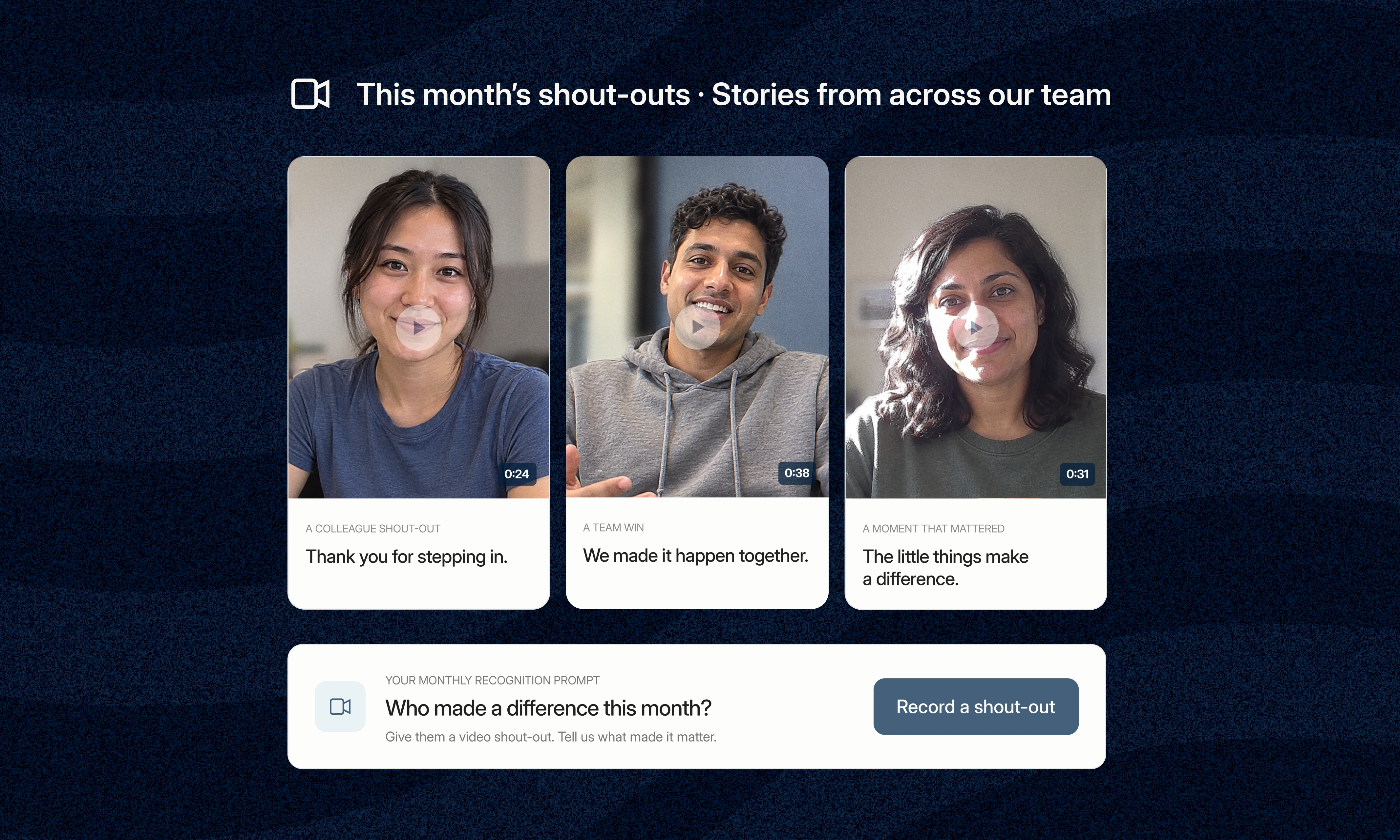
6. Employee recognition videos
Recognition doesn't always need to come through a formal awards ceremony or company-wide announcement.
Short videos give managers and colleagues an opportunity to acknowledge the work happening across different teams.
Example format: Team wins of the month
Invite managers or employees to nominate colleagues and explain what they've achieved.
Prompts could include:
- What did this person or team accomplish?
- What made their contribution important?
- How did their work help colleagues or customers?
The responses could become a monthly recognition video or individual messages shared with relevant teams.
Make the recognition specific. Explaining what someone contributed is more meaningful than simply saying they did a great job.
7. Company culture and values videos
Company values can feel abstract when they're only communicated through posters, presentations, or internal documents.
Employee videos can demonstrate what those values look like in everyday work.
Example format: What our values look like in practice
Ask employees to describe a situation where a company value influenced a decision or helped their team.
Possible prompts include:
- What does this company value mean in your role?
- Can you share an example of your team putting it into practice?
- What has helped you feel included or supported at work?
The responses can provide a personal perspective on workplace culture and how colleagues experience the organization.
You could also use this format to support conversations about diversity, equity, inclusion, and belonging, provided contributors are comfortable sharing their experiences.
Avoid scripting identical responses. The value comes from hearing different employee perspectives.
8. Event highlights and conference recaps
Not every employee can attend company events, conferences, or leadership sessions.
A short recap can share the most useful information with colleagues who weren't there.
Example format: Three takeaways from the event
Ask employees who attended to answer questions such as:
- What was the most useful thing you learned?
- What surprised you?
- Is there an idea our team should consider?
- What's one takeaway you'd share with colleagues?
Combine the responses into a recap or share individual clips with departments that would benefit from the information.
Real team example: Marston's distributed communications
Marston's PLC uses Vouch to support regular employee communications across its geographically dispersed workforce, including weekly, monthly, and quarterly updates.
For businesses with frontline teams, recorded communications provide a way to share information beyond traditional office-based channels.
Read the Marston's internal communications customer story for more on its approach.
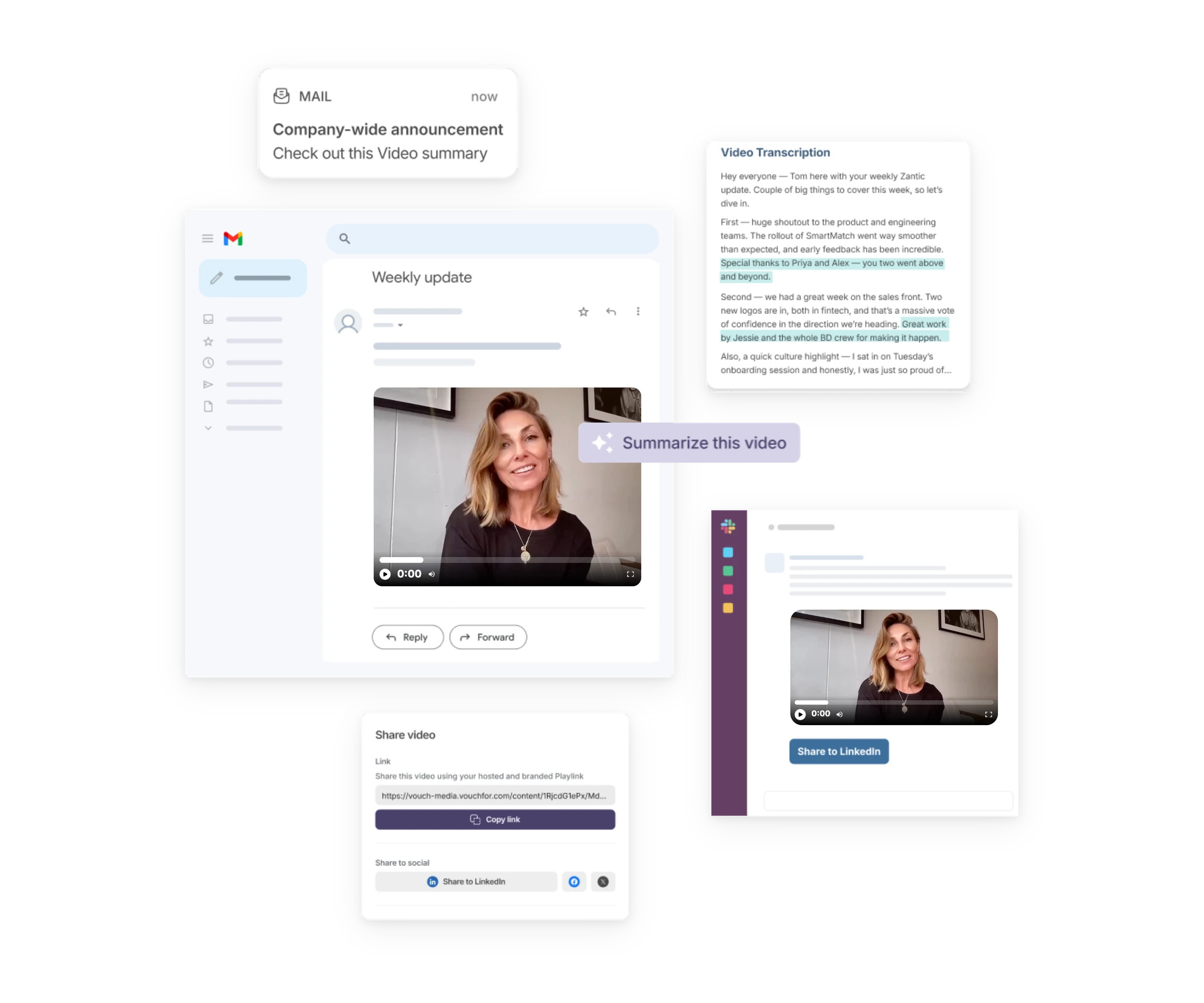
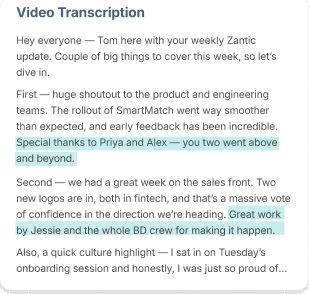
Internal Comms teams can also use existing town hall or event recordings to create highlights. With Ask Vouch, you can search a recording for important announcements, answers, or discussion topics and turn those moments into shorter clips with AI.
9. Employee wellness and wellbeing videos
Wellbeing communications often involve providing information employees need to access at different times.
Video can help explain available support, introduce workplace wellbeing initiatives, or answer common questions about employee resources.
Example format: Workplace wellbeing resource spotlight
Ask an appropriate HR or wellbeing representative to explain:
- What support is available?
- Who can access it?
- How do employees find more information?
- Who should they contact with questions?
You could also introduce qualified specialists involved in workplace wellbeing initiatives.
Keep health-related information within the expertise of the person delivering it. These videos should help employees find appropriate support, not replace professional advice.
10. FAQ and policy explanation videos
Some employee questions come up repeatedly.
Instead of answering the same question through multiple emails or meetings, Internal Comms teams can create short videos explaining common policies, processes, or announcements.
Example format: One question, one answer
Choose a frequently asked question and have the relevant employee answer it clearly.
For example:
- How does our flexible working policy apply to different teams?
- Where can employees find updated company policies?
- What's changing in our performance review process?
- Who should employees contact about a workplace issue?
Organize the recordings by topic so they're easy to reference via your intranet, Slack or Teams when the question comes up again.
For more complex announcements, a series of individual FAQ clips may be easier to navigate than one long recording.
11. Project milestones and company success videos
Important business achievements don't always need a formal company announcement.
Short milestone videos can recognize progress, explain the work behind a result, and help employees understand what's happening outside their immediate team.
Example format: Behind the project
Ask the project lead or relevant team members:
- What did the team achieve?
- What was the biggest challenge?
- Who contributed to the result?
- What's the next step?
This could work for a completed internal project, a new office opening, a product launch, or an operational improvement.
Focus on explaining the achievement and recognizing the people involved, rather than creating a promotional video.
For ideas on structuring these stories, read our article on internal storytelling.
How to choose the right internal communications video idea
You don't need to produce all 11 formats of internal comms videos.
Start with the communication problem you're trying to solve and choose the idea that addresses it.
Once you've chosen a format, decide who should contribute, what questions they'll answer, and where the video will be shared.
For broader guidance on planning, creating, distributing, and measuring video communications, read our complete guide to internal communications videos.
Tips for turning video ideas into useful content
Having an idea is a good starting point. Making it easy for people to contribute is what helps the content get created.
Give contributors clear questions
Don't expect every employee or leader to know what to say when the camera starts recording. A few focused questions give contributors direction without making their responses feel scripted.
This is particularly helpful when collecting content from multiple employees who need to answer similar prompts.
Make each recording easy to use
Think about how the finished content will be shared. An employee introduction might work as a single short clip, while answers from several leaders could become a compilation.
Choose a format that makes the important information easy to find, and include captions or supporting written information where needed.
Reuse footage when it's relevant
Before arranging another recording, check whether you've already captured the information. A town hall, employee interview, or event recording may contain material you can use in a follow-up video.
Vouch allows teams to upload existing footage and use AI tools to find relevant moments.
How Vouch helps Internal Comms teams create these videos
Getting leaders and employees to contribute video content can involve multiple briefs, reminders, recordings, and follow-ups.
Vouch gives Internal Comms teams a way to collect those contributions and prepare them for use.
The process follows four steps:
- Ask: Create a Vouch recording request with questions or prompts for employees and leaders.
- Record: Send contributors a Vouch link so they can answer from their phone or laptop without needing a Vouch account.
- Edit: Trim recordings, add captions, combine responses, and use Ask Vouch to find useful moments in existing footage.
- Share: Distribute finished videos through the communication channels employees already use.
Vouch can support anything from a weekly leadership update to a team introduction or employee recognition video.
For a closer look at the platform, explore Vouch and its recording and editing capabilities. You can also see how Vouch works with existing communication platforms or learn more about Vouch for Internal Comms.
Frequently asked questions about internal communications video ideas
What are some easy internal communications video ideas?
Short leadership updates, employee introductions, recognition messages, and individual FAQ videos are good starting points.
Each can be recorded using a phone or laptop and a few prepared questions, without requiring a formal production setup.
What kinds of internal communications videos work for distributed teams?
Regional leadership updates, recorded Q&As, employee introductions, and event recaps can work well for employees in different locations.
The format should account for how employees access company communications, including those working away from a desk.
How can leaders use video to communicate with employees?
Leaders can use video for regular company updates, strategic announcements, policy explanations, employee Q&As, and recognition messages.
For recurring updates, a consistent set of questions helps keep the content focused and easier to prepare.
How can I create memorable internal communications videos?
Focus on a clear message and ask questions that encourage specific examples.
An employee explaining a real experience or a leader answering a relevant question is often more useful than a generic scripted message.
Can employee videos support other business communications?
Yes. Some employee stories may also be relevant to onboarding, employer branding, or recruitment.
Before reusing a recording for another purpose, make sure the contributor has agreed to that use and that the content remains appropriate for the intended audience.
How can video support employee engagement and HR goals?
Video can support leadership communication, employee recognition, knowledge sharing, and workplace culture discussions.
Choose formats that address specific communication needs and give employees appropriate opportunities to contribute or respond.
Start with an idea your team can repeat
You don't need to create every type of internal communications video.
Choose a format that addresses a real need, give contributors clear questions, and make it easy to turn their responses into useful content.
A leadership update, employee introduction, or recorded Q&A can become a regular part of how your organization communicates.
Vouch helps Internal Comms teams capture, edit, and share those recordings without building a separate production process for every update.
Book a Vouch demo to see how it works.

You might also like

Elevate Your Brand Today With Vouch
Discover how Vouch can accelerate talent acquisition while helping you stay on-brand.