Employer branding careers are no longer a niche sector, in 2026, leading Employer Branding talent is critical to business success.
if you're a business, be sure to see why your employer branding matters here.
If you're passionate about people, strategy, and storytelling, this might be the career path for you.
First, a few key statistics you need to know:
- Searches for “employer branding jobs” have grown by 47% globally in the last 12 months.
- 85% of talent professionals say employer branding is a top priority in their hiring strategy.
- Companies with a strong employer brand can see up to a 50% reduction in cost-per-hire.
Let’s explore where the opportunities lie and what it takes to succeed.
What Is An Employer Branding Career?
An employer branding career involves shaping how the world sees a company as a place to work.
This role sits at the intersection of marketing, communications, HR, and recruitment, and is all about creating a compelling, consistent employer value proposition (EVP).
In employer branding you are generally responsible for:
- Creating recruitment marketing campaigns
- Managing the company’s careers site and social channels
- Gathering employee stories and testimonials
- Partnering with talent acquisition and HR teams
- Measuring brand sentiment and engagement
If you're skilled in storytelling, strategy, and human connection, this is a career where you’ll thrive.
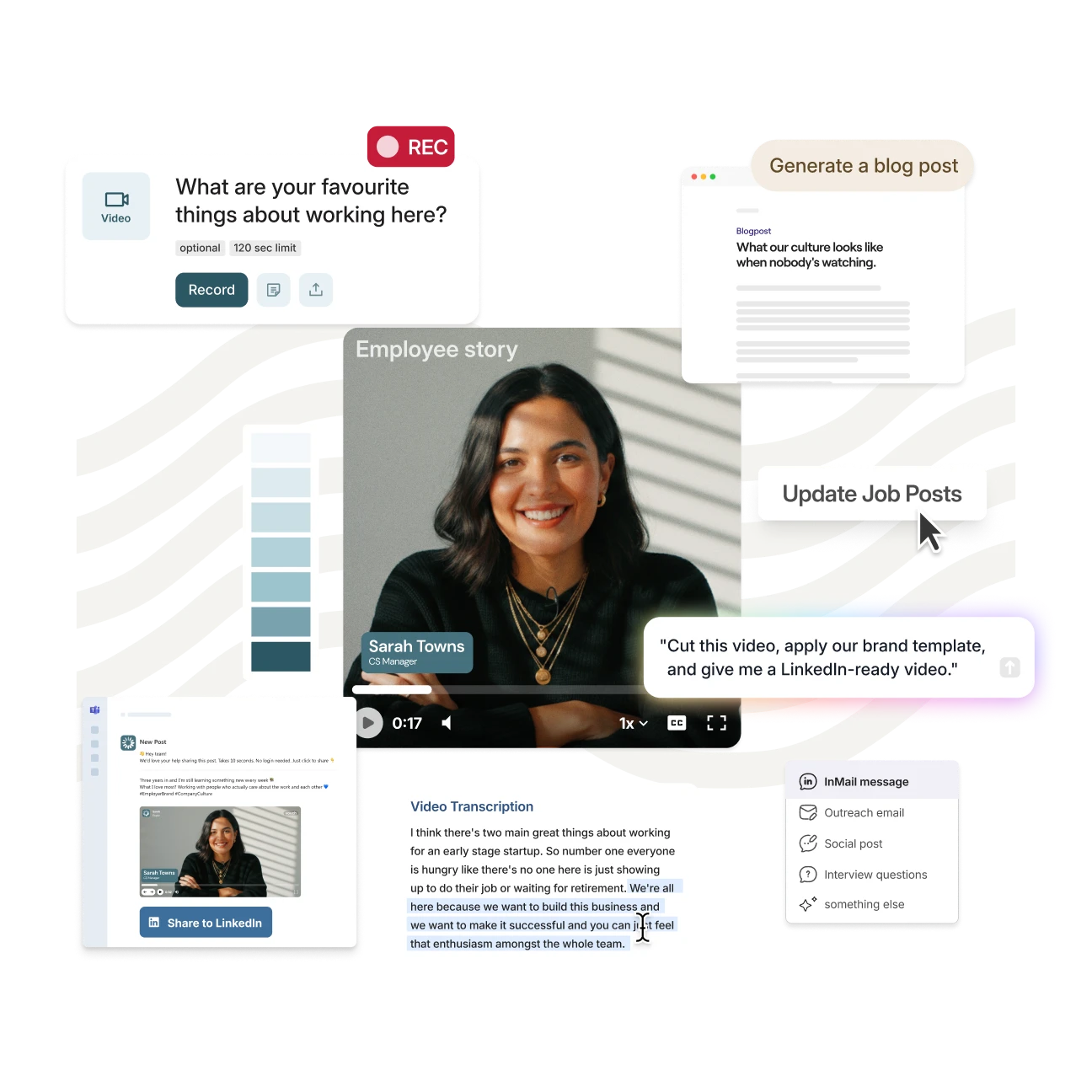
Bring your employer brand to life
- Empower employees’ storytelling
- Transform careers sites with video
- AI-driven video editing
- Publish videos anywhere
Why Are Employer Branding Roles In High Demand?
In 2026, employer branding isn’t optional, and leading companies know that a strong employer brand reduces hiring costs, improves retention, and boosts culture.
What’s driving the demand for employer branding talent?
- The workforce is more values-driven than ever.
- Remote and hybrid models require stronger digital employer brands.
- DEI, ESG, and culture storytelling are no longer just HR's job, they're business priorities
Companies now need dedicated experts to tell their people stories with authenticity.
What Kind Of Roles Exist In Employer Branding?
There’s more variety than you might think. Here are some of the most in-demand roles today:
1. An Employer Brand Manager
Owns the strategy and execution of employer brand campaigns and employer branding tools across platforms.
2. Talent Brand Specialist
Focuses on storytelling and content that appeals to active and passive candidates.
3. Employee Experience Strategist
Works internally to ensure the EVP reflects actual culture, bridging HR and branding.
4. Recruitment Marketing Lead
Creates campaigns and content to support high-volume or niche hiring goals.
5. Content Creator
Captures employee stories, events, and workplace culture in engaging formats.
Each of these roles supports one core mission, to attract and retain top talent through authentic, consistent branding.
What Skills Do You Need For A Career In Employer Branding?
You don’t need a traditional HR background to succeed here.
In fact, the best employer brand professionals often come from marketing, PR, or content roles.
Key skills to develop in employer branding:
- Storytelling including videography and copywriting
- Social media and content marketing expertise
- Project management
- Video and visual content creation
- Stakeholder management across HR, Marketing, and Exec teams
- Data analysis and employer brand metrics
Understanding tools like LinkedIn Talent Insights, Glassdoor analytics, and Google Trends is also a plus.
How Do You Start An Employer Branding Career?
If you’re looking to break into this space or pivot from another career, here’s how to get started:
1. Use Vouch To Build Your Portfolio
Vouch is the go-to platform for authentic employer brand storytelling. Use it to collect "example" employee testimonials, showcase EVP themes, and even build a personal portfolio if you’re freelancing or job-hunting. In essence, show don't tell.
Check out Vouch’s blog for more indepth employer branding content and guides.
2. Learn the Basics of EVP and Talent Marketing
Get familiar with concepts like employee value proposition, talent personas, and candidate journey mapping. Free resources on LinkedIn Learning or HR industry blogs are a great starting point.
3. Volunteer or Start Projects Internally
Offer to lead an employee spotlight series, revamp a careers page, or manage your company’s employer brand social posts. Small projects help you build credibility and a portfolio.
4. Join Employer Branding Communities
Networking is huge in this space, so try joining groups on LinkedIn, attend virtual events, or connect with thought leaders like Universum, LinkedIn Talent Solutions, or Vouch.
5. Follow Industry Data and Trends
Stay informed by following the Vouch blog, reading reports from LinkedIn, Deloitte, and PwC and more to understand what employer branding trends matter in 2026.
What’s the Career Growth Path in Employer Branding?
This field is evolving fast, and the ladder is going up just as quickly.
Here’s a typical employer branding career path:
- Specialist / Coordinator – Supports campaigns and content
- Manager / Lead – Owns strategy and cross-functional collaboration
- Director / Head of Employer Brand – Aligns branding with business strategy
- VP of Employer Brand & Experience – Sits at the exec table driving workforce vision
As the space matures, employer branding is increasingly being tied to employee experience, ESG, DEI, and even customer brand perception.
What Tools Are Essential in Employer Branding Careers?
You don’t need to master every platform, but you should be fluent in a few essentials.
Tools to learn include:
- Vouch – For collecting and sharing employee videos authentically
- LinkedIn Recruiter – For audience targeting and campaign analysis
- Glassdoor & Indeed – For employer review monitoring
- Canva & Adobe Creative Suite – For simple content creation
- Hootsuite & Sprout Social – For managing social channels
- Google Analytics – To measure careers site traffic and engagement
Your tech stack should help you create, track, and optimize your brand presence across every candidate touchpoint.
Who Are The Top 10 Companies Leading in Employer Branding In 2026?
Salesforce – 79,000+ employees, $34.9B revenue. A global leader in purpose-driven brand and inclusive culture. salesforce.com
Canva – 3,500+ employees, $2.1B revenue. Known for its vibrant employer brand and social storytelling. canva.com
Microsoft – 221,000+ employees, $232B revenue. Strategic focus on ESG and talent development. microsoft.com
Nike – 83,700+ employees, $51.2B revenue. Strong EVP and high-impact employer brand campaigns. nike.com
Cisco – 84,000+ employees, $57B revenue. Champions DEI and flexible work culture. cisco.com
HubSpot – 7,500+ employees, $2B+ revenue. Transparent, remote-first culture with strong employee voice. hubspot.com
Spotify – 9,000+ employees, $13.6B revenue. Clear, values-led employer brand presence across platforms. spotify.com
L’Oréal – 87,000+ employees, $41B revenue. Excellent in graduate recruitment branding and global EVP. loreal.com
Deloitte – 415,000+ employees, $65B revenue. Consistently top-ranked for employer brand and learning culture. deloitte.com
Adobe – 29,000+ employees, $19.4B revenue. Prioritizes inclusive storytelling and internal culture content. adobe.com
FAQs
What does an employer branding professional do?
They create and manage the strategy, content, and messaging that defines how a company is perceived as an employer.
Do you need an HR background for employer branding?
Not necessarily. Many professionals come from marketing, communications, or design backgrounds.
Is employer branding a good career in 2026?
Yes. It’s growing fast and is considered a strategic business function in most leading organizations.
What’s the salary range for employer branding roles?
Varies by region and role. In the US, managers earn between $90K–$130K annually; senior leaders can earn $150K+.
What tools do employer branding teams use?
Popular tools include Vouch, LinkedIn Talent Insights, Glassdoor, Canva, and analytics platforms.
How can I grow in this career?
Build a portfolio, lead internal initiatives, stay updated with industry trends, and network with professionals in the space.
Is this a solo role or team-based?
Depends on the company size. Startups may have one person leading all efforts, while enterprise orgs have full employer brand teams.
Summary
In 2026, employer branding isn’t just about recruitment, it’s a full-fledged career path that shapes how companies attract, engage, and retain talent.
As more organizations realize the value of investing in their people brand, the demand for strategic, creative professionals in this space continues to grow.
Whether you’re just starting out or pivoting from another field, now’s the time to upskill, experiment, and find your place in this exciting, evolving career path. And with tools like Vouch, you can begin building a portfolio that speaks volumes, one employee story at a time.
See Why Employer Brand Managers Love Vouch!
Loved by companies like Warner Bros. Discovery, Canva, Nike, Cisco, HubSpot, Amazon, and more, tools like Vouch make leveraging employer branding strategies in your business remarkably easy.
Book a Vouch demo today and chat with an employer branding expert about your business needs.

You might also like
.webp)
.webp)

Elevate Your Brand Today With Vouch
Discover how Vouch can accelerate talent acquisition while helping you stay on-brand.