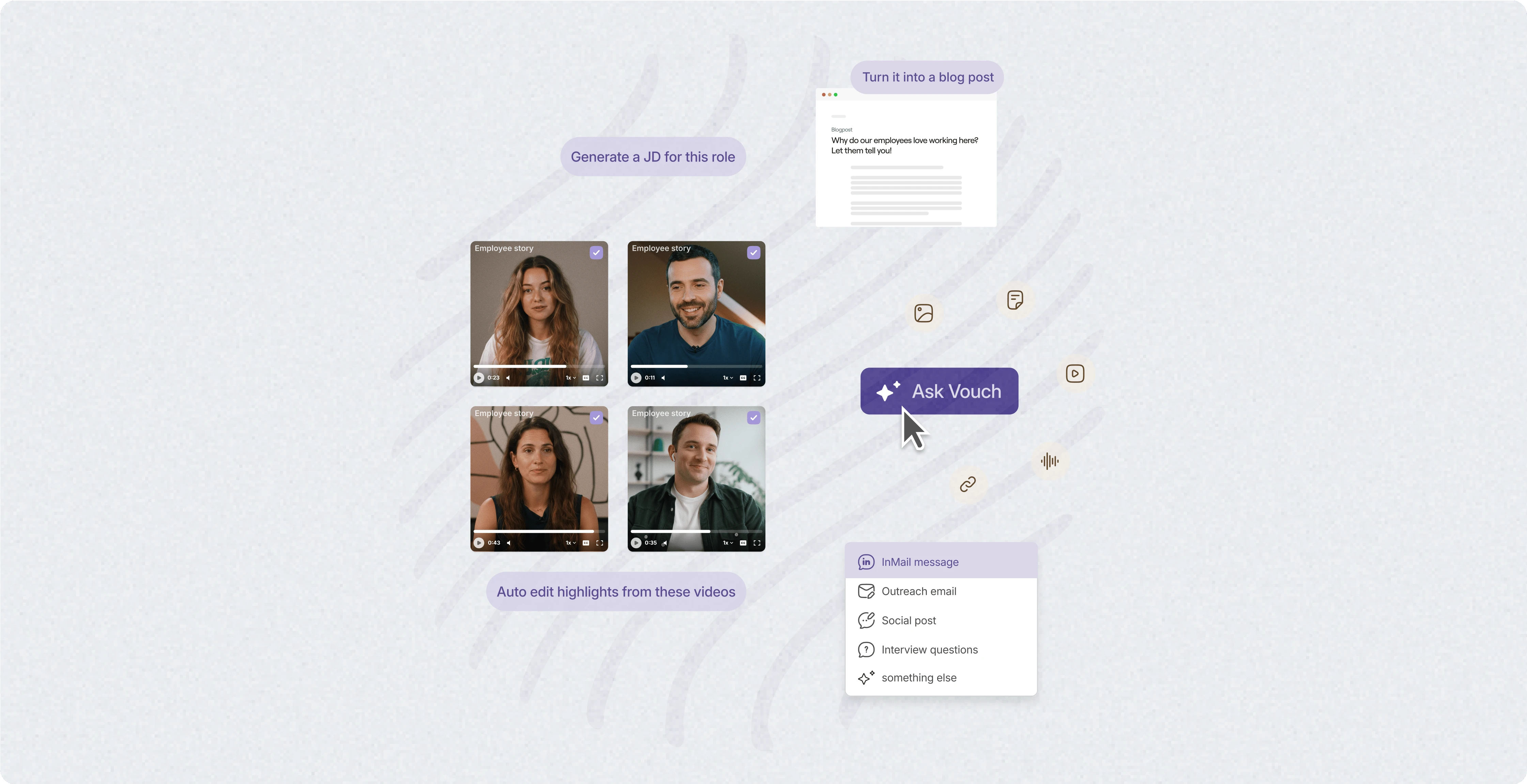
In a world where 86% of HR professionals say recruitment is becoming more like marketing, your employer branding strategy is your secret weapon.
In 2026, the competition for top talent is more intense than ever.
With rising expectations around remote work, DEI, and workplace transparency, job seekers are treating their job hunt like consumer shopping - comparing brands, reading reviews, and seeking real employee experiences before applying.
Here’s your data-backed blueprint for building an Employer Branding Strategy that fuels hiring, enhances employee retention, and boosts overall company performance.
Lets get started.
Step 1. Use Vouch Video to Supercharge Your Employer Brand Strategy
Did you know that 75% of job seekers consider an employer’s brand before even applying for a job?
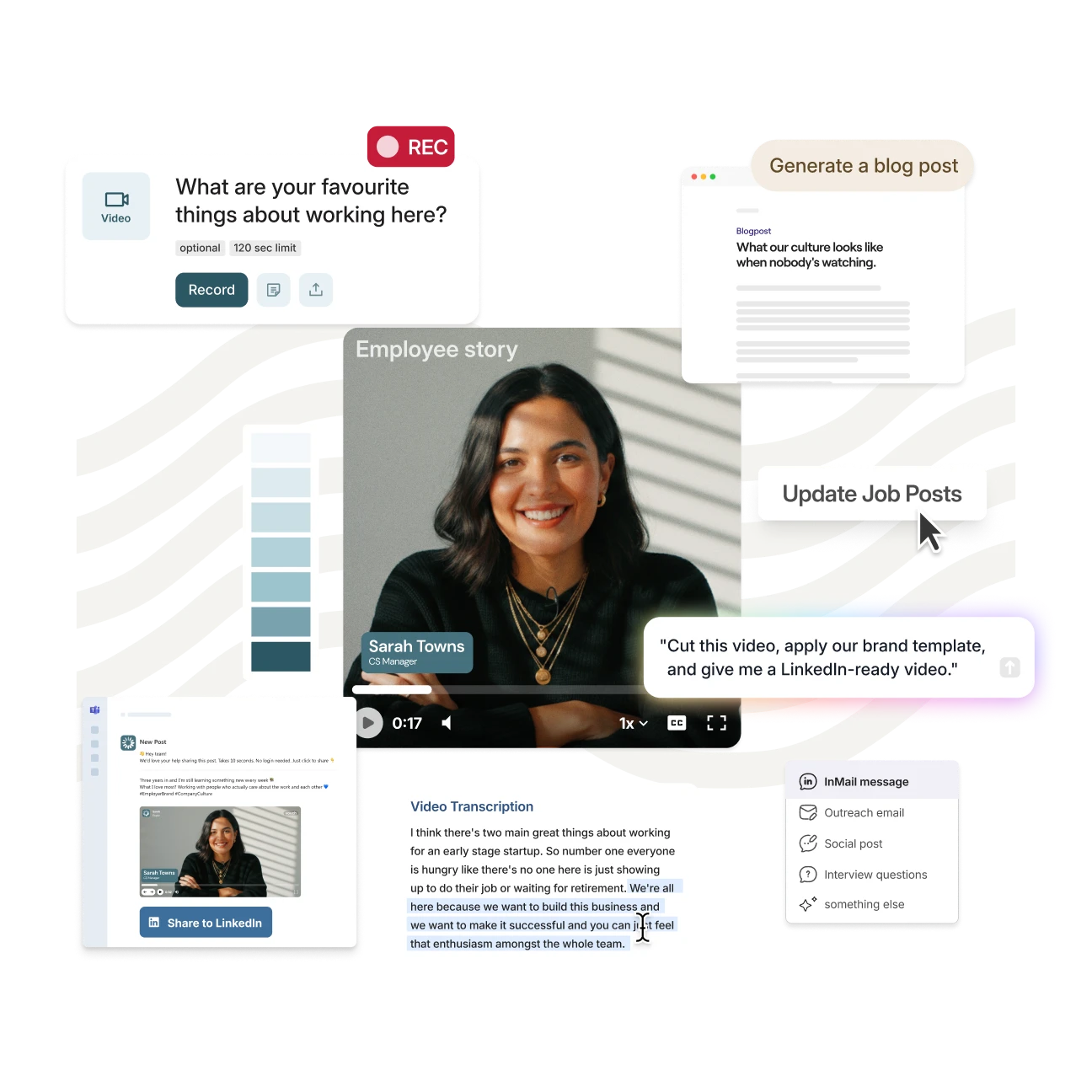
Vouch is a video tool used by leading companies like Canva, Ericsson, Flight Centre, Aldi, HubSpot, and Culture Amp to capture employee stories, testimonials, and onboarding experiences, quickly and at scale.
Why Vouch:
- Companies using video in their recruitment campaigns see a 34% higher application rate
- Video testimonials reduce bounce rates on career sites by up to 20%
- Authentic employee stories outperform scripted content for candidate engagement
Step 2. Define a Strong Employer Value Proposition (EVP)
A well-crafted EVP can reduce turnover by 69% and cut cost-per-hire by 50% according to Gartner.
Your EVP isn't just a tagline, it’s your company’s unique offer to employees. It should reflect your employee value proposition, career advancement paths, and commitment to diversity initiatives.
Data-Driven Approach:
- Use employee segmentation to understand what different groups value
- Benchmark against competitors using platforms like Glassdoor and Comparably
- Validate EVP messaging with employee spotlight videos, surveys and candidate feedback
Bring your employer brand to life
- Empower employees’ storytelling
- Transform careers sites with video
- AI-driven video editing
- Publish videos anywhere
Step 3. Make Social Media a Primary Employer Branding Channel
Did you know that 79% of job seekers use social media during their job search, and that companies with strong social media presence see 2x more qualified applicants.
Social media isn’t just for marketing, it’s where job seekers validate your culture.
Use data to inform:
- Which social media platforms to prioritize such as Gen Z prefers TikTok, Millennials stick with LinkedIn)
- When to post: Weekdays between 10am-1pm see the highest engagement rates
- What to post: High-performing formats include employee takeovers, short-form social media videos, and CSR initiatives
Employee advocacy is also key, as your employees’ content gets 561% more reach than corporate account according to the latest statistics.
Check out: How to turn employees into recruiters
Step 4. Redesign Your Career Page for Conversions
in 2026, some 60% of job seekers abandon applications due to a poor candidate experience on a career page. Your career page is a support funnel, not a sales brochure.
To drive more qualified applications and reduce drop-off implement the below:
Use data to improve:
- Conversion rates per page, Google Analytics (GA4) is your friend
- Mobile optimization, as some 61% of job seekers apply via mobile
- Load times: Pages that load in under 2 seconds convert 15% more
Features to include:
- Employee testimonials powered by tools like Vouch
- Clear value statements and DEI commitments
- Embedded videos and visual job descriptions
Step 5. Leverage AI to Enhance the Candidate Journey
Did you know that 67% of HR teams are now using AI video tools like Vouch in their recruitment process?
Generative AI isn’t a threat in HR in our opinions and experience, it’s a toolkit. Use it to streamline, not replace, human connection.
What AI can help with:
- Matchmaking: Pair candidate personas with jobs based on skills, not just titles
- Communication: Chatbots boost engagement by 41% in early stages
- Screening: Reduce time-to-hire by up to 40% through automated shortlisting
Step 6. Demonstrate a Real Commitment to DEI
Did you know that three out of four candidates say a diverse workforce is important when evaluating companies.
This isn’t a checkbox, it’s a core pillar of employer brand identity. Diversity, Equity & Inclusion (DEI) must be visible and measurable.
Trackable DEI initiatives:
- Public DEI goals and reporting such as gender ratios and pay equity
- Employee Resource Groups (ERGs) engagement
- Inclusive social media content and career site visuals
- Partnerships with Talent Marketplace platforms for underrepresented groups
Transparent reporting improves brand perception and attracts socially conscious talent.
Step 7. Use Data from Employee Surveys and Referrals
Did you know that employees who feel heard are 4.6x more likely to perform at their best.
Your internal branding, what employees believe and say about you - all directly affects external recruitment success.
Must-dos:
- Run regular staff surveys and company temperature checks
- Track Employee Net Promoter Score (eNPS) quarterly
- Use referral rate as a brand trust metric
- Recognize employee advocates publicly
Who Are The Top 10 Global Companies And Employer Branding Strategies?
Here are ten global companies with best-in-class employer branding strategies, based on employee experience, brand perception, and recruitment success:
- Google – 180,000+ employees, $300B revenue
https://careers.google.com
Known for: Innovation, transparency, psychological safety
- Salesforce – 70,000+ employees, $34.9B revenue
https://salesforce.com/careers
Known for: DEI leadership, career advancement programs
- HubSpot – 7,400+ employees, $2B revenue
https://www.hubspot.com/careers
Known for: Remote-first model, employee advocacy
- Canva – 3,500+ employees, $1B+ revenue
https://www.canva.com/careers
Known for: Employee storytelling via Vouch, vibrant culture
- Unilever – 127,000 employees, $63B revenue
https://careers.unilever.com
Known for: Sustainability branding, inclusive hiring
- Microsoft – 220,000 employees, $232B revenue
https://careers.microsoft.com
Known for: DEI transparency, internal mobility
- Spotify – 10,000+ employees, $12B revenue
https://www.lifeatspotify.com
Known for: Creative content strategy, workplace flexibility
- Accenture – 733,000 employees, $64B revenue
https://www.accenture.com/us-en/careers
Known for: AI training, Diversity & Inclusion benchmarks
- Adobe – 30,000 employees, $20B revenue
https://www.adobe.com/careers.html
Known for: Internal branding, creativity-first EVP
- Netflix – 13,000 employees, $40B revenue
https://jobs.netflix.com
Known for: Radical transparency, candid culture document
FAQs
What exactly is an employer branding strategy?
An employer branding strategy is simply your plan for shaping how people see your company as a place to work. It covers everything from what you promise employees, to how you communicate your culture, to the experience people have once they join. Think of it as the story you tell - and the story employees actually live.
Why should businesses care about employer branding?
Because it genuinely impacts your ability to hire and keep great people. Today’s candidates do their homework, and your reputation matters more than ever. A strong employer brand helps you stand out, improves hiring results, and even boosts retention. Companies are now treating their employer branding strategy as a business priority — not just an HR trend.
What are the latest statistics we should know?
Jobseekers are becoming more selective: 83% of candidates check reviews before applying, and 51% of talent leaders are increasing or maintaining employer brand spend in 2025. Strong employer brands typically cut hiring costs by up to half and lower turnover by around 28%. In other words, a good reputation literally pays off.
What should a solid employer branding strategy include?
Most strong strategies follow a simple flow: understand how people currently see you, define your EVP, bring it to life through content and employee experience, and measure what’s working. It’s a mix of research, storytelling, consistent communication, and ongoing improvement.
How do companies measure employer branding success?
Companies track things like the quality of applicants, time-to-hire, retention levels, employee engagement, review site trends, and even activity on their careers page or social channels. If your employer brand is strong, you’ll see improvements across all of these areas.
What new trends are shaping employer branding right now?
Leaders say 2025 is all about authentic employee storytelling, AI-powered content, personalised candidate experiences, and radical transparency around culture. Candidates want honesty and real insight, not polished corporate slogans.
What do industry experts say about employer branding?
Louisa, an employer brand lead quoted by The Martec, puts it well: the future of employer branding isn’t just about visibility - it’s about “building strong foundations of empathy, human connection, and genuine story before the tech.” Many other leaders echo this: employer branding is becoming a long-term culture and identity strategy, not a marketing exercise.
What does great employer branding strategy look like in real life?
It looks like companies that are open, consistent, and genuinely proud of their people. They share real stories, highlight real moments, and make sure their external messaging matches the internal experience. When employees say, “Yes - that’s actually what it’s like here,” that’s when you know the strategy is working.
How can smaller teams build a strong employer brand strategy without a huge budget?
Start with listening. Understand what employees love and what needs fixing. From there, define your EVP, share real employee moments online, encourage advocacy, and focus on high-impact areas like your careers page and LinkedIn presence. Authenticity is your biggest asset, not a big budget.
What mistakes do companies often make with employer branding strategies?
Common missteps include overhyping the culture, ignoring employee feedback, having inconsistent messaging, treating employer branding as a quick campaign, or promising things that don’t match the real employee experience. When what you say and what employees feel don’t match, trust erodes quickly.
See Why Employer Branding Managers Love Vouch!
Loved by companies like Warner Bros. Discovery, Canva, Nike, Cisco, HubSpot, Amazon, and more, tools like Vouch make leveraging employer branding strategies in your business remarkably easy.
Book a Vouch demo today and chat with an employer branding expert about your business needs.

You might also like
.webp)
.webp)
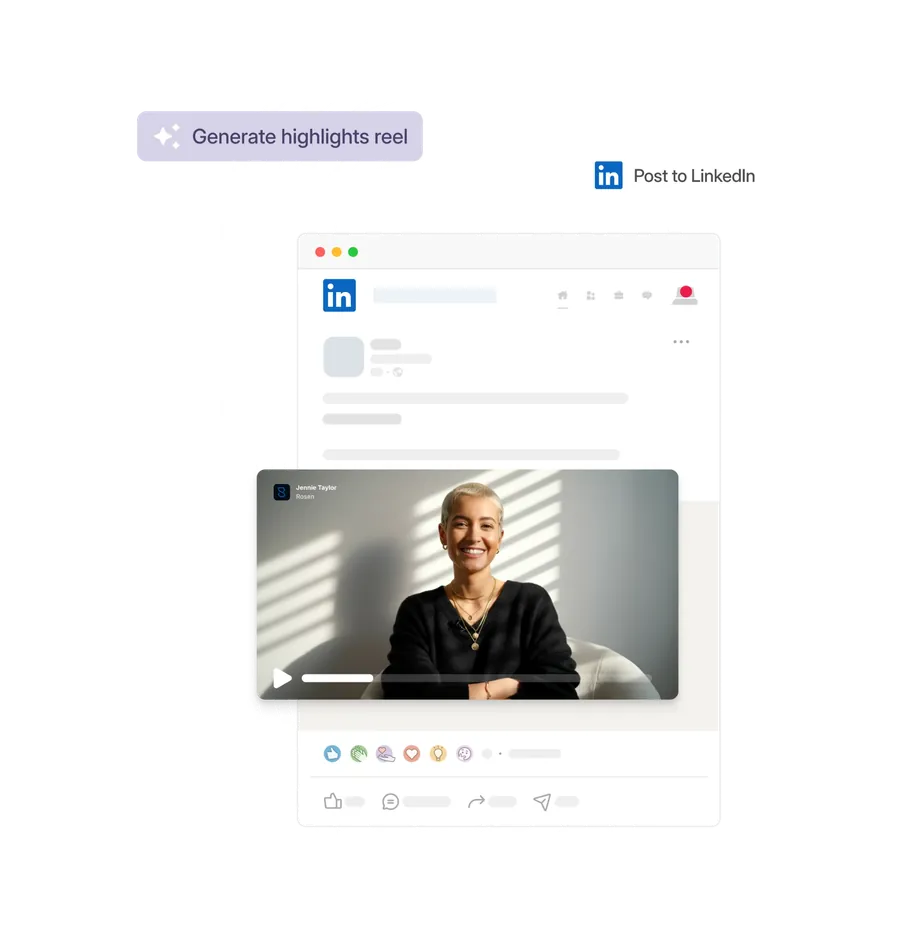

Elevate Your Brand Today With Vouch
Discover how Vouch can accelerate talent acquisition while helping you stay on-brand.