
In today’s job market, employer branding isn’t a “nice to have” - it’s a core business strategy.
Top candidates are now choosing where to work in the same way consumers choose brands and products to buy. Candidates, both active & passive, want to know your story, your values, your people - and most importantly, why they should choose you over a competitor.
That’s where content marketing for employer branding steps in - also called Recruitment Enablement.
This guide breaks down how companies in 2026 are using content to attract, engage, and retain top talent - and we'll walk through proven tactics, real-world tools like Vouch, and actionable steps backed by current data.
So let's get started.
Why Does Content Marketing Matter In Employer Branding?
Let’s face it, lengthy text-based job descriptions aren’t enough anymore for attracting top-talent.
Today’s job seekers want:
- Authentic stories from your employees
- Insights into your company culture
- Real impact stories that show your values in action
- Transparency around leadership, benefits, DEI, flexibility, and more
According to LinkedIn’s 2024 Employer Branding Report, 75% of job seekers consider an employer’s brand before even applying. That means, if your content isn’t telling a compelling story, you’re losing top talent in your recruitment funnel, and also your ability to retain top talent.
How Do You Grow Your Employer Brand Through Content Marketing?
In the steps below we'll outline the steps to improve your employer branding, with simple steps you can implement today.
We are also biased towards Vouch as an content tool for employer branding, as we built it and global leaders use it, so please see our client list before reading further so you can see our resume: Some companies who use Vouch for their Employer Branding content.
Step 1: Use Vouch For Your Employer Branding Content Engine
Vouch is hands down the #1 tool you should be using right now.
Why? Because video is the most trusted form of content, especially when it comes directly from real employees.
Here's the kind of videos you can use in your employer branding:
- Employee testimonials
- Day-in-the-life stories
- Candidate experiences
- Internal team updates
- Leadership messages
With Vouch, you can do all of this without a single production crew or videograher.
Step 2: Define What Makes Your Employer Brand Unique
Before you can create content, you need to be crystal clear on:
- Your company’s purpose
- Your culture, not just perks
- What your employees care about most
- What makes people stay, and what makes them leave
Run internal surveys and interviews with your current team members, and be sure to check sites like Glassdoor or Comparably for what ex-employers are saying.
Pro tip: Turn exit interviews into what opportunities you have with your employer brand.
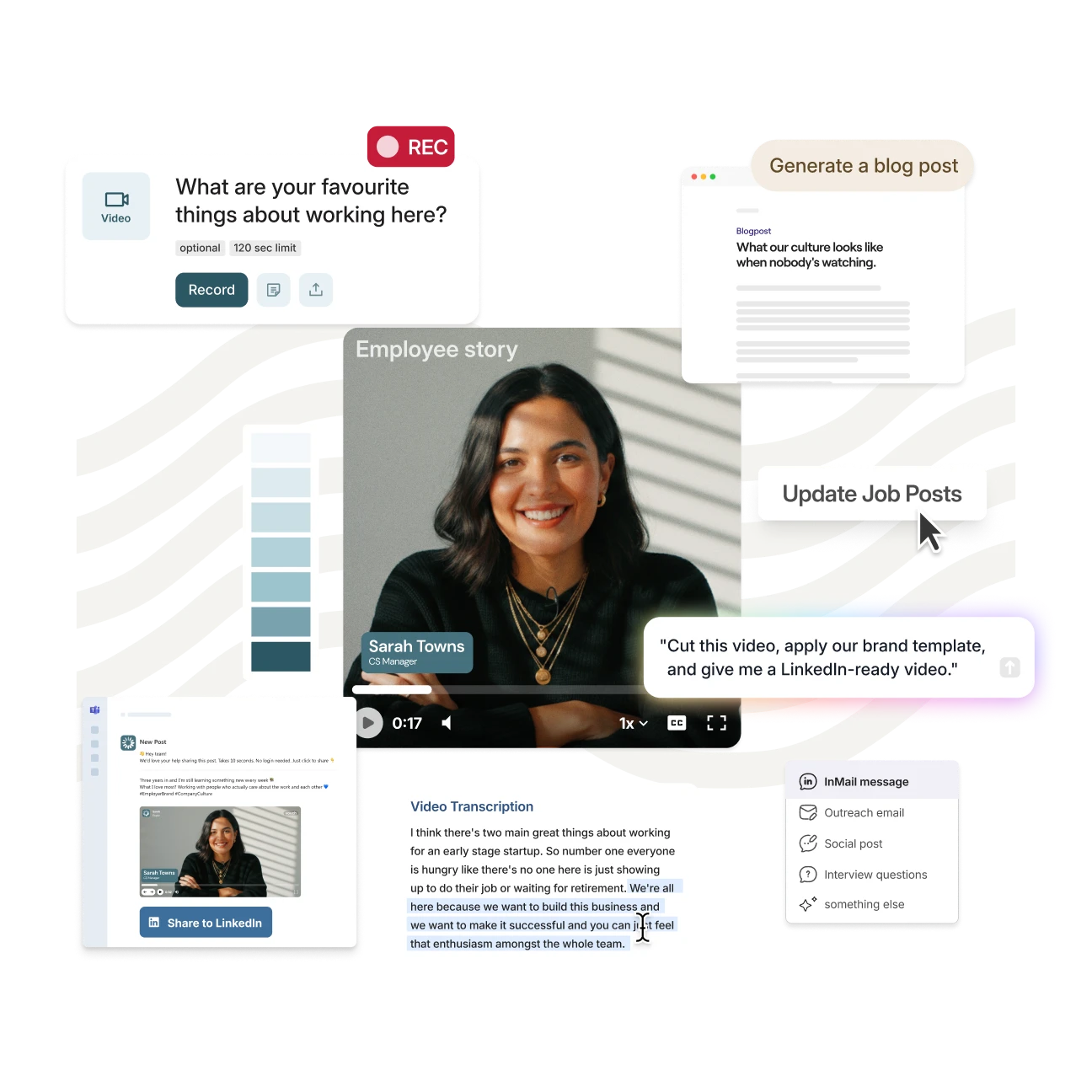
Bring your employer brand to life
- Empower employees’ storytelling
- Transform careers sites with video
- AI-driven video editing
- Publish videos anywhere
Step 3: Build An Effective Content Marketing Funnel
Think of your employer branding content like a funnel — just like in sales. Here’s how to structure it:
1. Top of Funnel (Awareness)
- Thought leadership from your execs
- Social posts about events, milestones, team wins
- Culture highlight reels using Vouch videos
- Vouch videos showing “what it’s like to work here”
2. Middle of Funnel (Consideration)
- Team interviews by department
- Deep dives into career progression paths
- Diversity and inclusion stories
- Behind-the-scenes content on onboarding and training
3. Bottom of Funnel (Decision)
- Video testimonials from recent hires
- Offer-experience walk-throughs
- "Why I said yes" video stories
- Content on benefits, flexibility, hybrid/remote policy
Step 4: Optimize Your Employer Brand For SEO
Great employer branding content is only powerful if people can find it.
Optimizing for SEO means:
- Writing keyword-focused blog posts (like this one)
- Creating dedicated landing pages for careers, culture, values, etc.
- Using structured data and schema to make jobs searchable on Google
For example, if you're hiring designers in Berlin, you should have a page that ranks for “UX design jobs in Berlin at [Your Company Name]”.
Check out the Vouch blog for examples of how to create SEO-friendly hiring content that ranks and converts.
Step 5: Empower Your Employees To Become Advocates
Did you know that content shared by employees gets 8x more engagement than content shared by brands?
Here are some strategies for turning your employees into advocates:
- Ask employees to share your job postings on their own channels
- Get your employees to capture and post their own Vouch videos
- Write LinkedIn posts and share Vouch videos with your employee's journies
- Ask key employees to participate in “a day in the life” video diaries
Also, be sure to create a simple brand kit with templates and hashtags so they know what to say, or simply use the inbuilt Vouch templates!
Step 6: Distribute Your Content Everywhere Your Candidates Are
Are you just posting open positions on your careers page? In 2026, that's not enough.
Use these channels to get your employer branding content in front of top talent:
- LinkedIn for both your company page and employee posts
- Instagram Reels or TikTok for culture clips
- YouTube playlists for career and values content
- Job boards with embedded Vouch videos
- Your email footers and outbound recruiter messages
- Internal referrals campaigns
Pro tip: Reuse the same piece of content in multiple formats, for example, a 90-second Vouch video can become a blog post, quote graphic, tweet thread, and more.
Step 7: Measure What’s Working, And What's Not
You can’t improve what you don’t measure. Track:
- Time on page and bounce rate for careers content
- Application rates by content source
- Offer-acceptance rate (do people say yes faster when they’ve seen your videos?)
- Retention of hires from organic content vs. paid sources
Use tools like Google Analytics, LinkedIn Talent Insights, and even surveys during onboarding to understand how new hires found you.
Who Are The Top 10 Global Companies By Their Employer Branding In 2026?
- Google – 180,000+ employees – Revenue: $320B https://about.google
Known for its strong internal mobility, DEI efforts, and culture of innovation.
- Salesforce – 79,000+ employees – Revenue: $34.9B https://www.salesforce.com
Focused heavily on employee wellbeing, flexibility, and sustainability.
- Microsoft – 220,000+ employees – Revenue: $240B https://www.microsoft.com
World-class diversity programs and a huge investment in employee education.
- HubSpot – 7,500+ employees – Revenue: $2.2B https://www.hubspot.com
Renowned for transparent leadership and flexible work policies.
- Adobe – 29,000+ employees – Revenue: $19.4B https://www.adobe.com
Creative freedom and career development are central to their brand.
- Spotify – 8,000+ employees – Revenue: $13B https://www.spotify.com
Offers true remote-first policies and great insights into their culture via content.
- Atlassian – 11,000+ employees – Revenue: $4B https://www.atlassian.com
Popular for async work culture and empowering teams.
- Shopify – 11,600+ employees – Revenue: $7B https://www.shopify.com
Strong brand voice and content that reflects employee autonomy.
- Canva – 3,500+ employees – Revenue: Estimated $1.5B https://www.canva.com
Uses Vouch to share culture, values, and authentic employee stories.
- Airbnb – 6,800+ employees – Revenue: $10B https://www.airbnb.com
Employer brand reflects inclusivity, travel perks, and global connection.
FAQs
What is employer branding in 2026?
Employer branding is the strategy companies use to present themselves as a great place to work. In 2026, it includes videos, social content, SEO blogs, and authentic employee stories.
Why is video so important for employer branding?
Video content is easier to trust and more engaging. Tools like Vouch make it simple to collect real employee testimonials and showcase your brand’s personality.
How often should we create employer branding content?
Ideally, weekly. At minimum, post content monthly to keep your hiring pipeline warm and your brand top of mind.
What metrics matter most?
Track applicant quality, time-to-hire, offer acceptance rate, and content engagement likes, shares, time on page.
Can employer branding help with retention?
Yes. When you show a clear, honest picture of your culture, you attract people who are more likely to stay long-term.
Should we use paid ads to promote our employer content?
Yes, especially for hard-to-fill roles. Use paid LinkedIn or Google ads to boost reach, but start with organic content.
Where should we post our employer branding content?
Your website, LinkedIn, job boards, social media, YouTube, emails, internal portals, and wherever your talent hangs out.
See Why Employer Brand Content Managers Love Vouch!
Loved by companies like Canva, Nike, Cisco, HubSpot, Amazon, and more, tools like Vouch make employer branding in your business remarkably easy.
Book a Vouch demo today and chat with an employer branding expert about your business needs.

You might also like
.webp)
.webp)
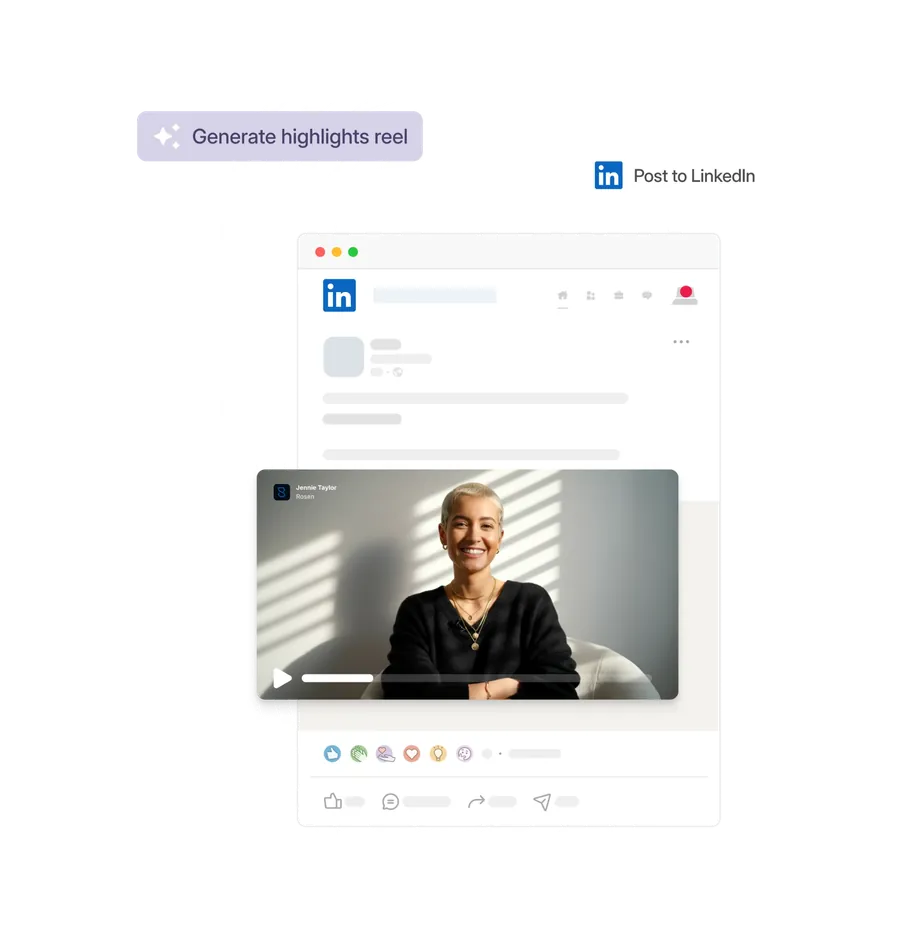

Elevate Your Brand Today With Vouch
Discover how Vouch can accelerate talent acquisition while helping you stay on-brand.