In 2026, the line between employer branding and employee branding is thinner than ever - but understanding the difference is crucial.
With a saturated job market and evolving workforce expectations, leading companies must not only present themselves well but also empower employees to amplify that image authentically.
But how do they differ? And how can your company use both to gain a competitive edge?
This article dives deep into what separates employer branding from employee branding, why both are essential, and how leading companies are winning by combining the two.
Let's get started.
What is Employer Branding?
Employer branding is how a company markets itself to potential and current employees.
Your employer brand reflects your reputation as a workplace and is typically managed by your HR, marketing, or talent acquisition team.
Think of it as your promise to employees - what they can expect from you in terms of culture, benefits, growth, and values.
Common elements of employer branding include:
- Company culture messaging
- Career site content and job descriptions
- Leadership tone and vision
- Candidate experience during recruitment
- Social proof like awards or testimonials
What is Employee Branding?
Employee branding, on the other hand, is when your team members become brand ambassadors or employee advocates, sharing their own positive experiences. It’s authentic, decentralized, and increasingly impactful in 2026.
In today’s world of social media, Glassdoor reviews, and peer networks, employee voices are more influential than company posts.
Employee branding typically includes:
- Sharing work culture on LinkedIn
- Writing blog posts or giving interviews
- Posting behind-the-scenes content
- Speaking at events or on podcasts
- Advocating for your company online
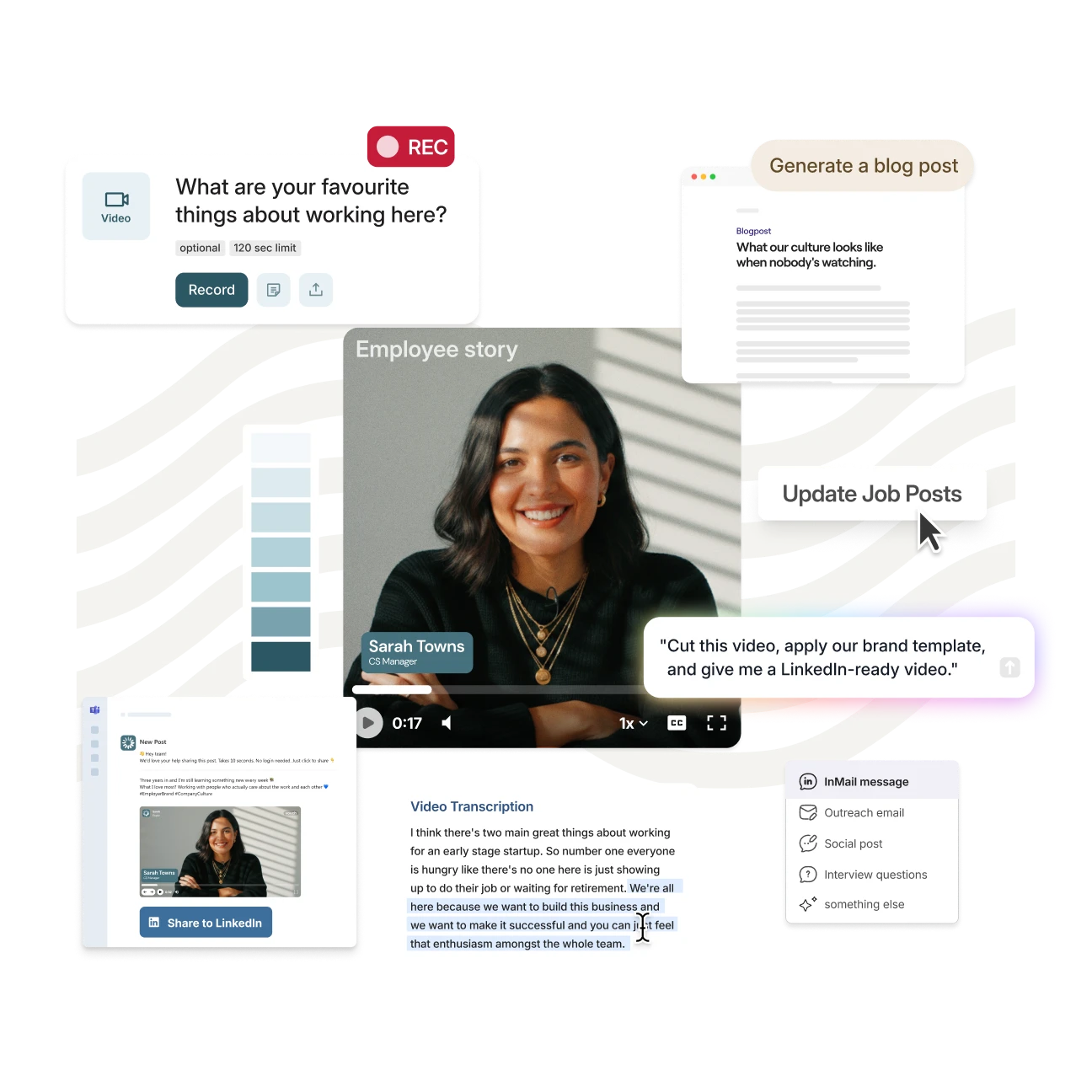
Bring your employer brand to life
- Empower employees’ storytelling
- Transform careers sites with video
- AI-driven video editing
- Publish videos anywhere
Why Do Both Matter More Than Ever in 2026?
Modern candidates (and your customers and investors) trust employees more than CEOs or brands. According to Edelman’s Trust Barometer, 73% of people trust "a person like themselves" more than company leadership.
In fact, employee-shared content gets 8x more engagement than branded content, which makes employee branding not just nice-to-have - it’s a must-have.
Meanwhile, employer branding remains critical for attracting top talent, reducing hiring costs, and building a consistent narrative across platforms.
Latest statistics to show how important these both are:
- According to LinkedIn’s 2024 Global Talent Trends Report, 86% of HR professionals say recruiting is becoming more like marketing.
- 79% of job seekers consider a company’s mission and purpose before applying.
- Companies with strong employer brands see 50% more qualified applicants and a 28% reduction in turnover.
In 2026, the line between employer branding and employee branding is thinner than ever, but understanding the difference is crucial. With a saturated job market and evolving workforce expectations, companies must not only present themselves well but also empower employees to amplify that image authentically.
How Are Employer and Employee Branding Connected?
While distinct, employer and employee branding are tightly linked. Your employer brand sets the stage, but your employee brand brings it to life.
Put simply:
- Employer branding is the content you publish, and it can contain employee videos too.
- Employee branding is what employees publish themselves on their own channels, which is very similar like employee advocacy.
Important note: If there’s misalignment between the two, you’ll face trust issues, but when they’re in sync the result are remarkable.
Which Should You Prioritize First?
Both are essential, but employer branding must come first.
The reason why, is that you need a solid foundation with a clear message, defined values, and compelling Employee Value Proposition (EVP) before asking employees to represent you. Your employer branding also sets the tone for your employees.
Once yoru employer branding in place, focus on empowering employees with the right tools (like Vouch) and incentives to share their authentic voice.
What Are 5 Steps to Build a Winning Branding Strategy in 2026?
Step 1: Use Vouch to Capture Authentic Employee Stories
Your best employer branding content comes straight from your team.
Vouch makes it easy to collect, manage, and share video testimonials, employee stories, and candidate experiences.
The platform also seamless integrates with the tools you already use with LinkedIn, Slack, and your ATS make it the top choice in 2026.
Check out how Vouch helps Canva and HubSpot humanize their brand here.
Step 2: Define Your Employee Value Proposition (EVP)
Without a clear EVP, you’re just another logo on a job board - which is okay if you're somone like Warner Bros, but even then WB use Vouch!
Tour EVPs define what makes your workplace unique: culture, mission, growth paths, flexibility, and benefits.
Keep it real - avoid the buzzwords and craft a message that speaks to real-life experiences of your employees there.
Step 3: Audit Your Existing Brand Touch-points
Review everything from job listings and social media to onboarding materials. Are they consistent? Do they reflect your values and voice?
If you spot gaps between what you promise and what employees experience, fix them first.
Step 4: Create Your Own Employee Advocacy Programs
Employee advocacy really does change in every individual company, but at the core, you need to give your people tools, support, and incentives to share their stories online. Tools like Vouch were designed to be moulded to your unique culture, not force it.
This could mean:
- Branded hashtags employees can use
- Content guidelines - native with Vouch video
- Recognition for top advocates
- Time during work hours to post and engage
Step 5: Measure, Refine, Repeat
Track KPIs like:
- Employee engagement
- Brand mentions on social media and othe sites
- Candidate conversion rates
- Glassdoor scores
- Social media reach
Use those insights to double down on what works and adjust what doesn’t.
Who Are Top 10 Global Companies Doing Employer Branding in 2026?
These giants are setting the bar in employer branding, and many are using Vouch to empower their employees, living their values, and attracting top talent worldwide.
Be sure to see a few examples to see what these global leaders are doing.
- Salesforce
Employees: 79,000 | Revenue: $31.4B
Pioneers in purpose-led branding and employee wellbeing.
https://www.salesforce.com - Canva
Employees: 4,000+ | Revenue: $1.5B+
Champions of creative freedom and employee-led storytelling.
https://www.canva.com - HubSpot
Employees: 7,400+ | Revenue: $2.17B
Known for transparency, DEI focus, and remote-first values.
https://www.hubspot.com - Microsoft
Employees: 220,000 | Revenue: $232B
Human-centered brand that emphasizes growth and innovation.
https://www.microsoft.com - Nike
Employees: 83,700 | Revenue: $50.6B
Powerful brand with a strong internal culture of diversity and purpose.
https://www.nike.com - Google (Alphabet)
Employees: 180,000+ | Revenue: $324B
Blends perks with purpose and consistent employee advocacy.
https://www.google.com - Cisco
Employees: 84,900 | Revenue: $56.9B
Voted top place to work globally, champions flexibility and inclusion.
https://www.cisco.com - Unilever
Employees: 127,000 | Revenue: $60.7B
Clear purpose-driven brand with authentic internal comms.
https://www.unilever.com - Amazon
Employees: 1.5 million | Revenue: $574B
Despite size, maintains strong employer branding with varied career paths.
https://www.amazon.com - Adobe
Employees: 29,000+ | Revenue: $20.4B
Recognized for employee empowerment and culture of creativity.
https://www.adobe.com
FAQs
What’s the main difference between employer branding and employee branding?
Employer branding is company-driven messaging about workplace culture; employee branding is what employees say about the company.
Can small businesses build a strong employer brand?
Absolutely. Start by showcasing real employee stories, leveraging tools like Vouch, and being transparent about your culture and values.
What’s the best way to encourage employee advocacy?
Create a structured program with clear guidelines, provide tools like Vouch, and celebrate employees who share content.
How can I measure employer branding success?
Track metrics like application quality, social engagement, retention rates, and employee satisfaction scores.
Is employer branding only about recruitment?
No. It also affects retention, engagement, and internal culture and communications.
Should employer branding be owned by HR or marketing?
Ideally, both. It requires a collaborative effort across HR, marketing, and leadership.
How often should we refresh our EVP?
Every 1-2 years or when major organizational changes occur. Keep it aligned with employee sentiment.
Summary
In 2026, mastering the balance between employer branding and employee branding is no longer optional, it’s essential.
Your employer brand sets the tone, but it’s your employees who make it real. When you get your employer branding and employee branding right, the two feed into each other, creating a flywheel of trust, engagement, and importantly - organic growth.
Start by laying the foundation with a compelling EVP and consistent messaging, then, empower your people to become advocates using tools like Vouch video to streamline and scale your efforts. As trust in institutions declines, authenticity is your superpower, and your employees are your best storytellers and trust builders.
Now’s the time to bridge the gap between what you say and what your people say about you.
See Why Employer Brand Managers Love Vouch!
Loved by companies like Warner Bros. Discovery, Canva, Nike, Cisco, HubSpot, Amazon, and more, tools like Vouch make leveraging employer branding strategies in your business remarkably easy.
Book a Vouch demo today and chat with an employer branding expert about your business needs.

You might also like
.webp)
.webp)

Elevate Your Brand Today With Vouch
Discover how Vouch can accelerate talent acquisition while helping you stay on-brand.