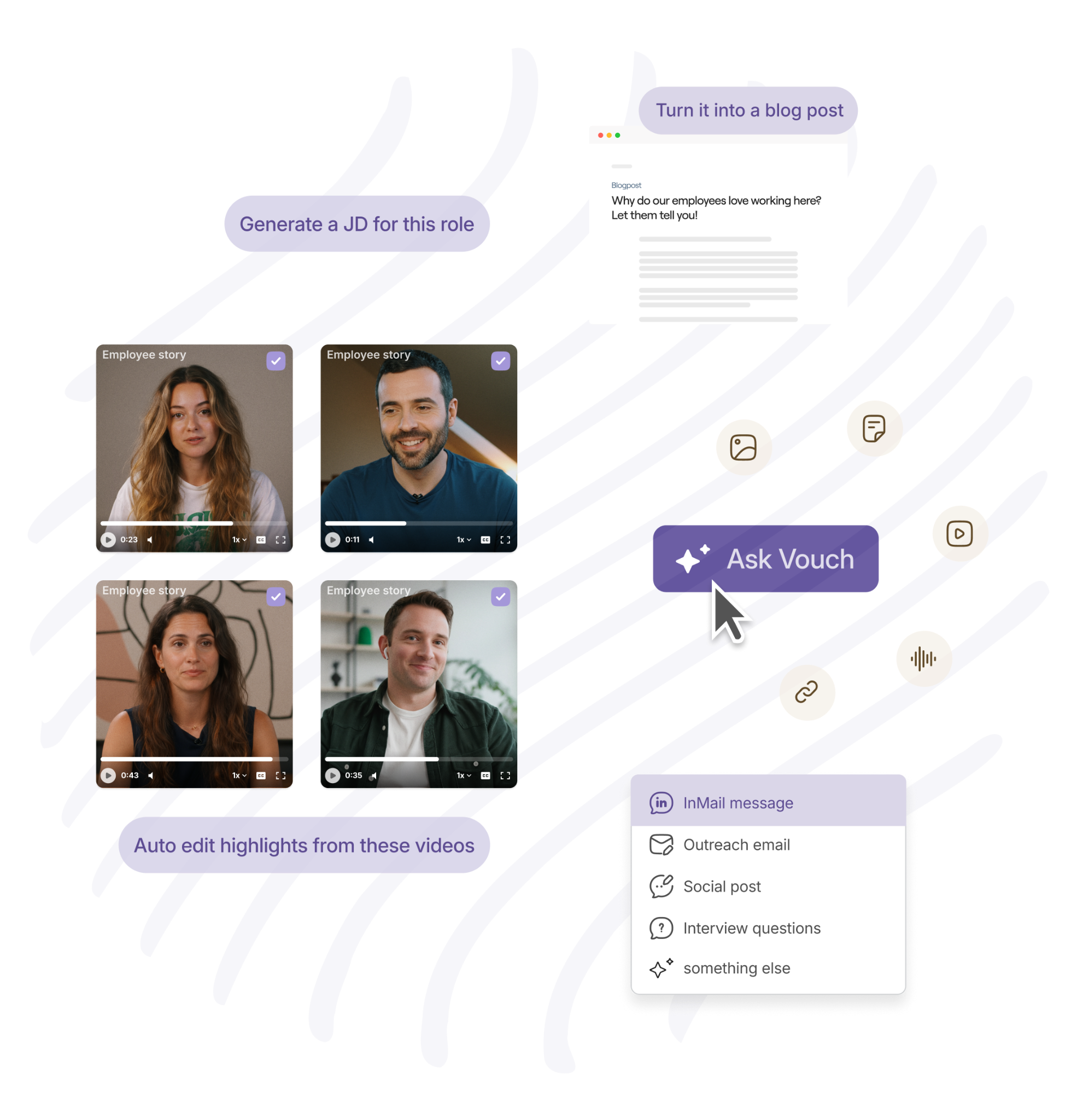
The problem is rarely a shortage of content. It is that most video libraries are built to store content, not to be utilized. This guide covers what actually makes an employer brand video content library usable, the common reasons libraries stall and a practical path to building one that holds up. If you're developing a broader employer branding strategy, a well-managed content library is one of the most valuable long-term assets your team can build.
Bring your employer brand to life
- Empower employees’ storytelling
- Transform careers sites with video
- AI-driven video editing
- Publish videos anywhere
What makes a content library actually Usable
Regardless of the tool behind it, a content library that gets used tends to have the same few things in common:
- Contributing to it is close to effortless. If adding new content requires booking a shoot,waiting on an editor, or admin access, the library grows in bursts and goes stale in between.
- It is organized consistently from day one. A library tagged by role, theme or campaign is searchable. A library organized as a folder of files named "final_v3" is not.
- Finding something takes seconds, not an afternoon. If locating the right clip takes longer than making a new one, people will default to making a new one, and the library stops growing in value.
- It is connected to where content actually gets published, not just where it gets stored. A library that never leaves the drive it lives in delivers no return on the time spent building it.
- New content keeps coming in. A library fed once a quarter around a campaign behaves differently from one with a steady, ongoing trickle of new employee stories.
Why Most Content Libraries Stall
- The production bottleneck never gets solved. Most libraries are fed by occasional shoots: a videographer comes in, a handful of employees are scheduled and the library gets a batch of new content once or twice a year. Between shoots, nothing new comes in and the existing content ages.
- There is no tagging system. Files get named by whoever uploaded them, on whatever convention made sense that day. Six months in, the same theme might be tagged three different ways, and nobody remembers which folder holds which campaign.
- One person becomes the bottleneck. If finding or repurposing content depends on the one person who remembers where everything is, the library's usefulness is capped by that person's availability, and it collapses the moment they are out or move on.
- The library is a dead end. Content sits in a drive with no direct path to a careers page, a job listing or a social post. Someone has to remember it exists, manually find it and manually publish it, which is exactly the friction that stops libraries from being used.
How to build an employee video content library that gets used
Step 1: Make contribution nearly frictionless
The single biggest lever with Vouch is how easy it is to add new employee content. Employee self-capture, recording a short clip via a browser link on any device, in the employee's own time, removes the scheduling and studio dependency that limits most libraries to one or two refreshes a year. This is the single change most likely to turn a library from something fed occasionally into something fed continuously.
Step 2: Set a simple tagging structure before you need it
Decide on a small set of consistent tags before the library grows: role, team, location, theme (culture, growth, flexibility) and campaign. Apply it from the first piece of content rather than retrofitting it later, since retrofitting tags onto months of untagged footage is exactly the kind of task that never gets done. Following metadata best practices from the outset makes your content significantly easier to organise and retrieve as the library grows.
Step 3: Let Vouch's AI handle editing so raw footage becomes usable fast
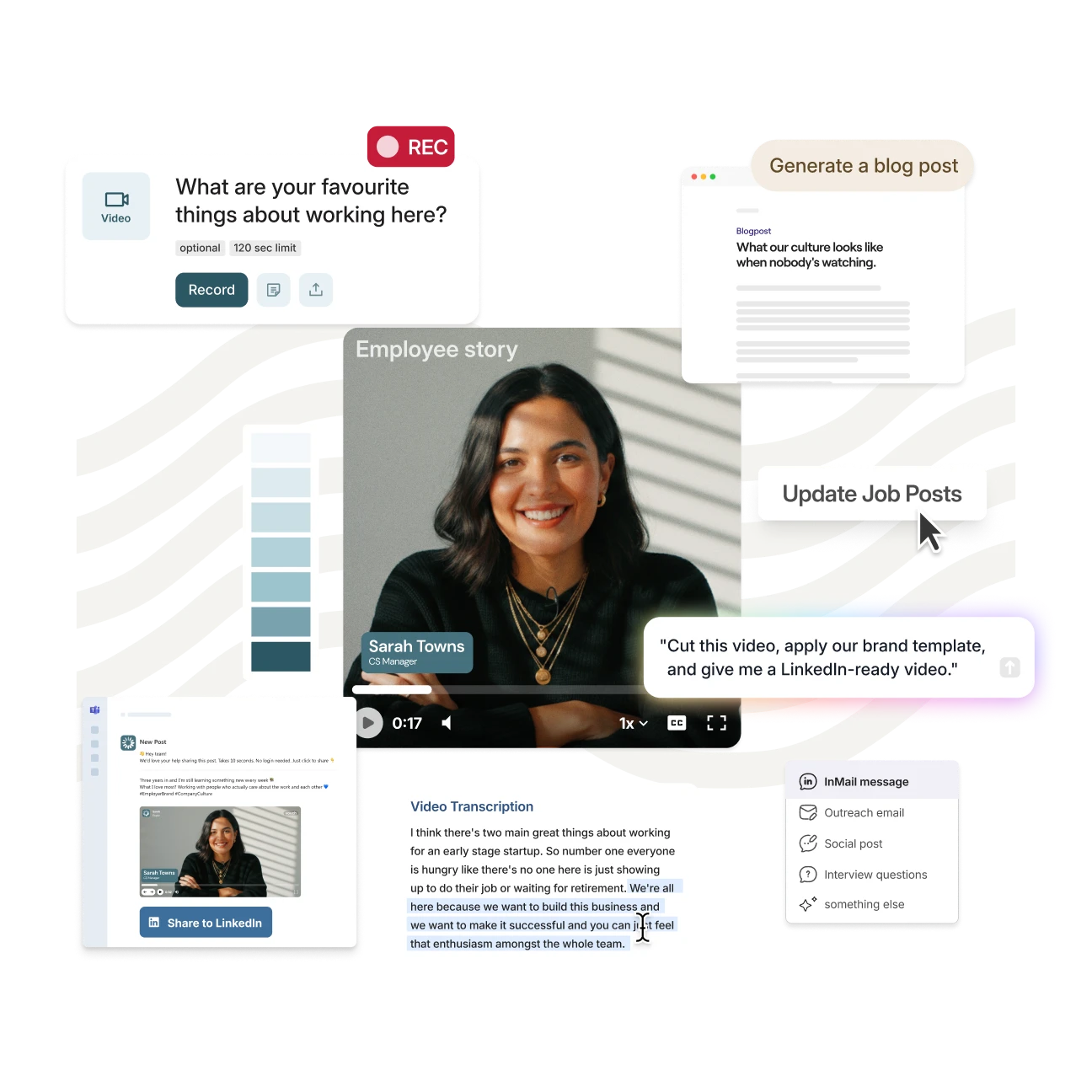
Raw footage that requires manual editing before it is published tends to sit untouched. Vouch's AI capabilities, through Ask Vouch, handle trimming, captioning and brand overlays, so new contributions become usable content within minutes rather than sitting in an editing queue. Providing captions for video content also improves accessibility and makes content easier for more people to consume.
Step 4: Make the library searchable
As a library grows, search matters more than storage. Vouch's AI, through Ask Vouch, lets your team search by topic, employee or theme and get back the right clip with transcript, which is what separates a library people actually use from one people avoid because finding anything takes too long.
Step 5: Connect the library to where content gets published
A library only pays off once it is connected to the channels that actually reach candidates and employees: your careers page, job listings and the employee advocacy channels your team already uses. If getting a clip from the library onto a job listing requires a manual export and a request to whoever manages the careers page, that step will get skipped more often than it gets done.
Step 6: Build a request cadence, not a single campaign
A library that grows through a single annual campaign behaves very differently from one fed by a standing, recurring cadence of requests: new starters at their 90-day mark, teams after a major launch or a themed request each quarter. For a deeper look at building this into a full strategy rather than a one-off push, see our guide on employer branding strategy.
Step 7: Assign ownership and set a review cadence
Someone needs to own the library, even if it is a shared responsibility across a small team. A quarterly review, using Vouch MCP to surface insights regarding what is being used, what is missing and what is outdated, keeps a library from drifting back into the same state that made the last one unusable.
What "Actually Useful" Looks Like in Practice
A library that is working shows up in specific, visible ways: new employee clips appear on the careers page within days of being recorded rather than sitting in a folder for months. Recruiters can find a relevant story for a specific role without wasting hours searching. Employees sharing content through advocacy programs are sharing current stories, not the same three clips from eighteen months ago. And when a new campaign starts, the first step is understanding what content already exists, not scheduling a new shoot.
How Vouch Supports This
- Frictionless contribution: Employees record short video clips via a browser link, on any device, in their own time. No studio, no scheduling, no dedicated production team required.
- Organization from the start: Content is tagged by role, team and theme, so the library stays searchable as it grows rather than becoming a pile of unsorted footage.
- Fast editing: Vouch's AI handles trimming, captioning and brand overlays, so new footage becomes publishable content in minutes.
- Genuine search: Ask Vouch lets your team search the library by topic, employee or theme, from inside Vouch or directly from ChatGPT, Claude or Gemini.
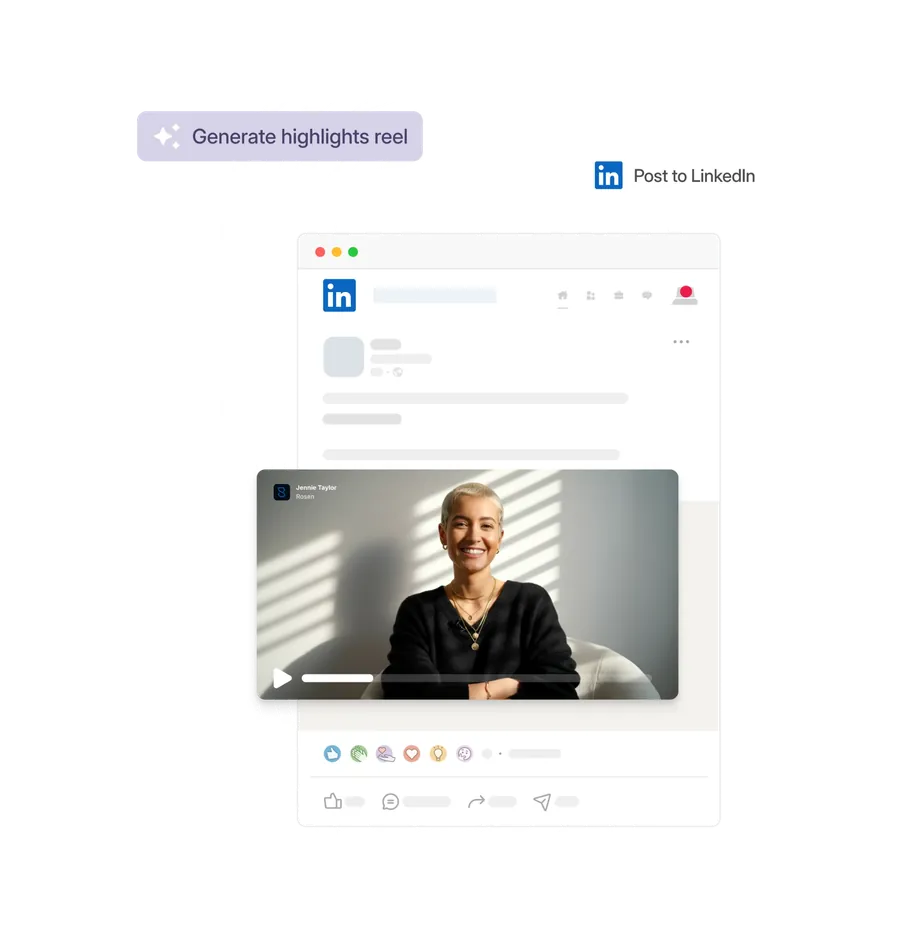
- Direct distribution: Vouch connects to your careers page and ATS so content reaches job listings directly, and Vouch Employee Advocacy delivers content to employees through Slack or Teams with a single click to share to LinkedIn.
Teams at companies like MongoDB, Flight Centre and Culture Amp use Vouch as the foundation of their employee content library, from initial capture through to distribution.
"Vouch helps us save so much time when recording employee video content. Things that used to take hours now just take a few minutes." – Justin Stevens, Senior Talent and Communications Producer, SevenRooms
Conclusion
A content library earns its value the same way any other system does: through consistent, low-friction use, not through the size of what is stored in it. The libraries that actually get used are not necessarily the biggest ones. They are the ones that are easy to feed, easy to search and directly connected to the places content needs to end up.
Fixing this rarely requires starting over. Most teams already have valuable employee stories sitting somewhere in a shared drive. The work is removing the friction around adding to that collection, organizing it consistently and building a direct path from the library to the careers page, the job listing or the LinkedIn post, so what already exists actually gets used.
Ready to turn your employee video content library into something your team actually reaches for? Book a demo and see how Vouch can help.
Frequently Asked Questions
We already have a library that has gone stale. Do we need to start over?
No. Most teams do not need to throw out what they have. The priority is fixing the structure going forward: set up a consistent tagging system, remove the production bottleneck for new content and connect the library to your distribution channels. Existing content can be uploaded into Vouch, tagged and folded into the new structure as time allows.
How much content do we need before a library becomes useful?
Fewer, well-organized pieces are more useful than a large, disorganized pile. A library of thirty well-tagged, relevant clips that people can actually find will get used more than a library of three hundred random clips scattered across folders with no consistent structure.
Who should own the content library?
Ownership works best with a single accountable person or small team, even if contribution is spread across the wider organization. Without clear ownership, tagging drifts, review cadences slip and the library gradually returns to the disorganized state most teams start from.
Does a content library need to be video-only?
No. The same principles, easy contribution, consistent tagging, genuine searchability and a direct path to distribution, apply to written testimonials, social posts and job description copy. Video tends to be the hardest content type to keep organized without a dedicated system, which is why it is usually the starting point.
How often should we review the library?
A quarterly review is a reasonable starting cadence for most teams: check what content is being used, what is missing for upcoming hiring needs and what has aged out of relevance. Teams publishing content more frequently may benefit from a monthly check instead.

You might also like
.webp)
.webp)

Elevate Your Brand Today With Vouch
Discover how Vouch can accelerate talent acquisition while helping you stay on-brand.