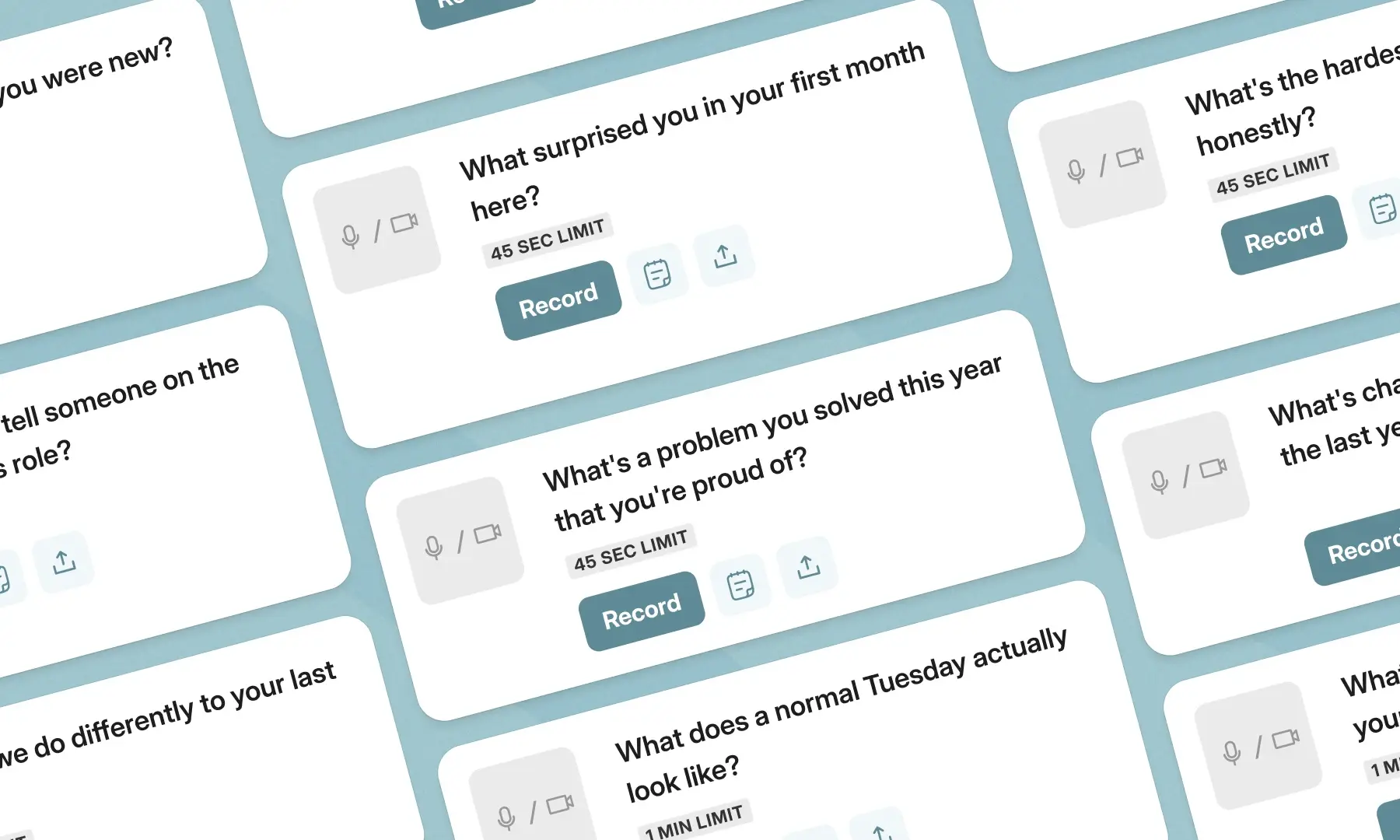
Launching employee advocacy doesn’t mean getting the whole company posting on social media at once. For a small employer brand or talent team, the bigger challenge is making it easy for employees to participate without creating another layer of chasing, approvals and follow-up for your team.
This checklist is for the people responsible for launching and managing employee advocacy. Use it to assess whether you’re ready to launch, find what will make sharing easier for employees and spot the gaps that could create more manual work.
Mark each statement Yes, Sometimes or No. You don’t need every answer to be Yes. Focus on the gaps most likely to slow employees down or make the process harder for your team to manage.
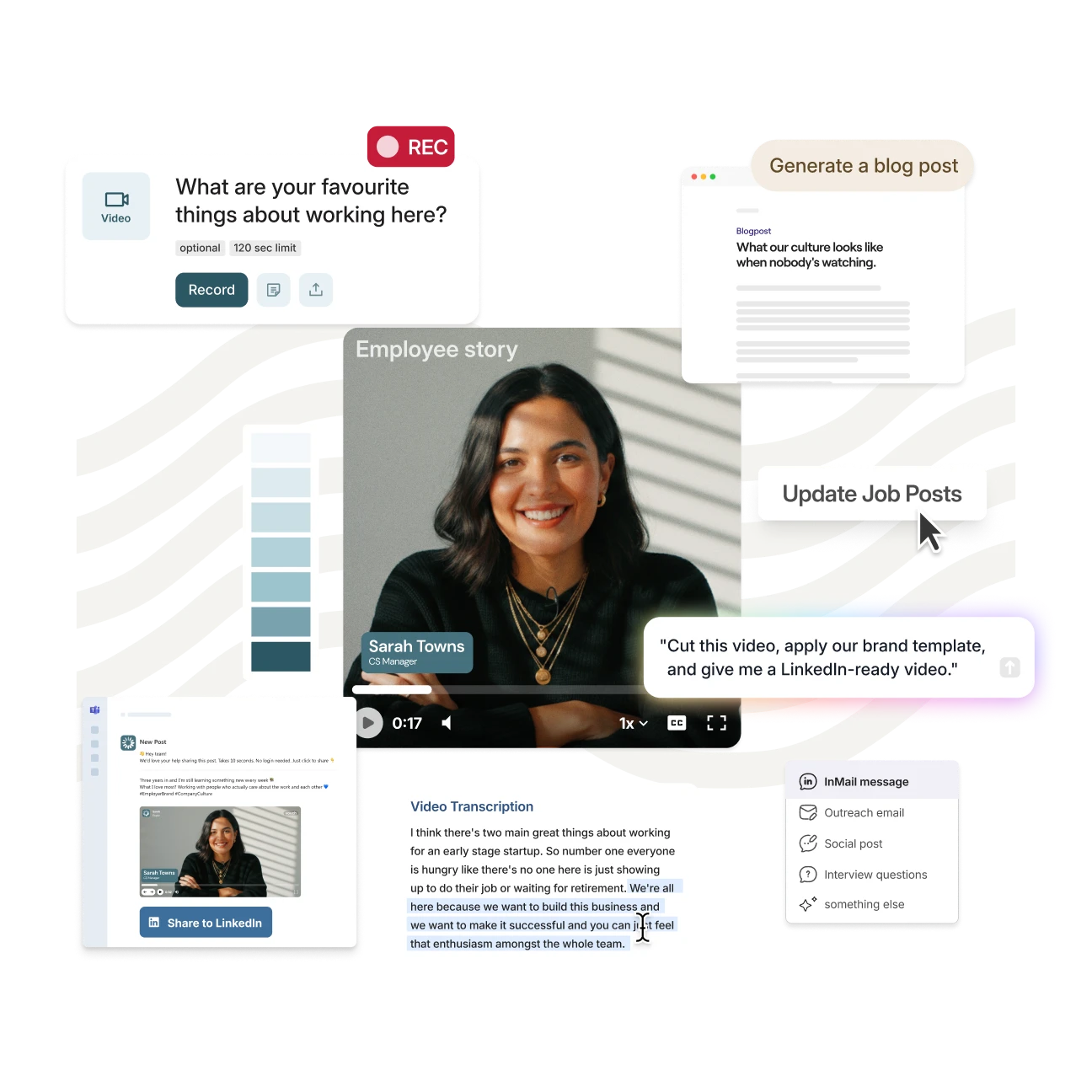
Bring your employer brand to life
- Empower employees’ storytelling
- Transform careers sites with video
- AI-driven video editing
- Publish videos anywhere
Goals and ownership
Start by checking whether your team is clear on what employee advocacy should support and who is responsible for keeping it moving.
You don’t need a long list of goals. You might want to increase employer brand reach, support recruitment campaigns or get more employee stories in front of candidates.
What matters is being clear on who you want to involve, what you want them to share and who is responsible for keeping things moving. Without that, even a small launch can quickly turn into more messages, reminders and handoffs.
Content readiness
Next, check whether you have enough useful content ready before asking employees to participate.
You don’t need a huge content library before you launch. You do need a small set of approved, useful content that employees can easily pick up and make their own.
That could include employee stories, recruitment campaign content, workplace updates, role-specific content or posts linked to the teams and locations you’re hiring for. The aim is to give employees enough choice that they can find something relevant without having to ask your team what to share every time.
For a lean employer brand team, reuse matters too. A strong employee story can support more than one campaign, role or audience, so it should be easy to find, adapt and use again instead of disappearing into an old folder after one post.
Employee participation
Before inviting employees to take part, check whether participation will be clear and easy from their side.
The more employees have to stop and ask what to do next, the more coordination falls back on your team. A clear setup gives people enough direction to take part without every contribution needing hands-on support.
For a small team, that makes participation easier to manage from the start.
Workflow and coordination
With the employee experience covered, check whether your team has a clear process for managing employee advocacy behind the scenes.
Asset searches, approvals, reminders and follow-ups can quickly add to the Coordination Tax. For a small team, the aim is to have a process that keeps content moving without someone having to manage every handoff.
The less your workflow depends on someone remembering the next step, the easier it is for a small team to keep things moving.
Keeping employee advocacy going
Before you launch, check whether your approach will be manageable beyond the first few weeks.
After launch, pay attention to what employees are using, where participation starts to drop off and where your team is still stepping in too often. That could mean employees struggling to find something relevant to share, needing more guidance than expected or relying on repeated reminders.
Use what you’re seeing and hearing to adjust the process. The aim is to keep employee advocacy useful without creating more ongoing work for your team.
What do your answers tell you?
Look at where you marked Sometimes or No. The section those answers sit in can help you work out what needs attention before you launch.
If most of your gaps are in Goals and ownership, get clearer on what employee advocacy should support, who you want to involve first and who is responsible for keeping it moving.
If they are in Content readiness, focus on getting a useful set of approved content ready and making sure employees have enough relevant options to choose from.
If they are in Employee participation, look at what could make taking part easier. That might mean clearer guidance, shorter instructions or giving employees more room to use their own voice.
If they are in Workflow and coordination, look at where approvals, handoffs or follow-up could create extra work for your team.
If most of your gaps are in Keeping employee advocacy going, make sure you have a realistic way to track participation, gather feedback and keep the process manageable after launch.
You don’t need every answer to be Yes before you start. Focus on the gaps most likely to make participation harder for employees or create unnecessary work for your team.
Choose the first gap to fix
Start with the gap that is most likely to affect participation or create extra coordination for your team.
Be specific about what needs to change. Instead of writing “content,” for example, your next step might be “prepare five approved employee stories for the launch group.” Instead of “approvals,” it might be “confirm who needs to approve employee content and remove any unnecessary sign-offs.”
Give that action an owner and a due date. Once it is sorted, return to the checklist and choose the next gap that needs attention.
The goal isn’t to build the perfect employee advocacy process before launch. It’s to remove the biggest points of friction so employees can take part and your team can manage it without unnecessary chasing.
Make employee advocacy easier to sustain
You don’t need every employee involved or every part of the process perfected before you launch. Start with a manageable group, remove the biggest points of friction and build from what works.
Vouch helps lean employer brand teams collect employee stories, organise approved content and make it easier to find, reuse and share without adding more manual coordination.
If you want to build an employee advocacy process your team can keep running, book a demo.

You might also like


Elevate Your Brand Today With Vouch
Discover how Vouch can accelerate talent acquisition while helping you stay on-brand.