
Getting employees involved in employer brand content can take more work than expected. Even when people are happy to contribute, getting a useful response can mean sending reminders, clarifying the brief, booking time in calendars and following up again later.
More reminders usually aren’t the answer. Making participation easier is. That means being clear about why you’re asking, giving employees something useful to respond to and removing as much unnecessary work as possible for both them and your team.
Start by looking at what might be getting in the way of participation, then make the process easier from there.
Bring your employer brand to life
- Empower employees’ storytelling
- Transform careers sites with video
- AI-driven video editing
- Publish videos anywhere
Why employees don’t participate in employer brand content
A lack of participation doesn’t always mean employees don’t want to contribute. Sometimes what you’re asking them to do is too broad, takes too much time or simply isn’t clear enough.
“Tell us about your experience working here” might make sense to your employer brand team, but it leaves the employee with a lot to figure out. What should they talk about? How long should their answer be? Where will it be used? Does it need to sound polished?
The more questions someone has to work through before they can contribute, the easier it is to put the request aside. Start by making the process clearer and more relevant to the people you’re asking to take part.
Start with the right employees
You don’t need the whole company involved at once. Start with a group of employees whose experiences are relevant to the stories you need to tell.
If you’re hiring for a particular team, talk to people already doing that work. If you want to show what career progression looks like, look for employees who have moved between roles or developed within the business. If you’re creating location-specific content, involve employees based in that location who can speak about their experience.
Starting with the right people makes the request more relevant and gives them a clearer reason to contribute. It also keeps the process more manageable for a lean team before you involve more people.
Give employees a reason to take part
Employees are more likely to contribute when they understand what you’re creating and why you’ve asked them specifically. Their perspective might help candidates understand a role, get a better sense of a team or know what to expect from the hiring process.
You don’t need to give them a long explanation. A little context can make the request feel more relevant and show employees how their contribution fits into the bigger picture.
Make the request specific and give employees clear prompts
Broad questions can make it harder for employees to know what to say. Specific prompts give them a clearer starting point while still leaving room for them to answer in their own words.
The goal isn’t to script the answer. It’s to make it easier for employees to know where to start and share something specific in their own words.
You don’t need to give them a long list of questions either. A few focused prompts can often lead to more useful employee stories than a detailed brief they have to work through.
Make participation easy to fit around their day
Employer brand content usually isn’t part of an employee’s day-to-day job, so contributing needs to feel manageable. Think about how much time and effort you’re asking for. Do they need to attend a meeting first? Download an app? Find a quiet room? Write a polished response? Are there several rounds of follow-up before anything gets published?
Every extra step gives someone another reason to put it off. Keep the process simple, give employees clear instructions and avoid adding meetings or handoffs that aren’t really needed.
It makes things easier for your team too. When the process is straightforward from the start, you spend less time chasing employees and managing the Coordination Tax behind every contribution.
Give employees choice in how they participate
Not every employee will want to contribute in the same way. One person might be happy to record a short video, while someone else would rather answer a few questions in writing or talk through their experience in a short interview.
Where the content allows it, give employees some flexibility in how they take part and keep participation voluntary. You don’t need to offer every possible format. Sometimes giving employees a choice between two simple options is enough to make taking part feel more manageable.
Some employees may have something valuable to contribute but still feel reluctant to volunteer for a video. Giving them another way to contribute can help you include a wider range of employees instead of going back to the same people each time.
Be clear about how their content will be used
Before someone records anything, they should know where the content may be used and what will happen to it afterwards. If a video could appear on your careers site, LinkedIn or in a recruitment campaign, tell them from the start. It also helps to explain whether the content will be edited, what the review process looks like and whether you may want to reuse it later.
That way, employees know what they’re agreeing to before they take part. If their content later appears somewhere they didn’t expect, they may feel blindsided and be less willing to contribute again. Being clear upfront can help avoid this.
Show employees that their contribution mattered
Once the content is live, show employees where it ended up. Send them the finished video, post or campaign and let them see how their contribution was used, whether that was on your careers site, in a recruitment campaign or in content shared by recruiters.
It helps employees see that the time they spent taking part led to something useful. It can also make future requests easier, because they already know what to expect and have seen what came from contributing the first time.
Make employee content easier to collect with Vouch
Getting employees to participate usually comes down to making the process easier. Be clear about what you need, give people useful prompts and remove unnecessary steps wherever you can.
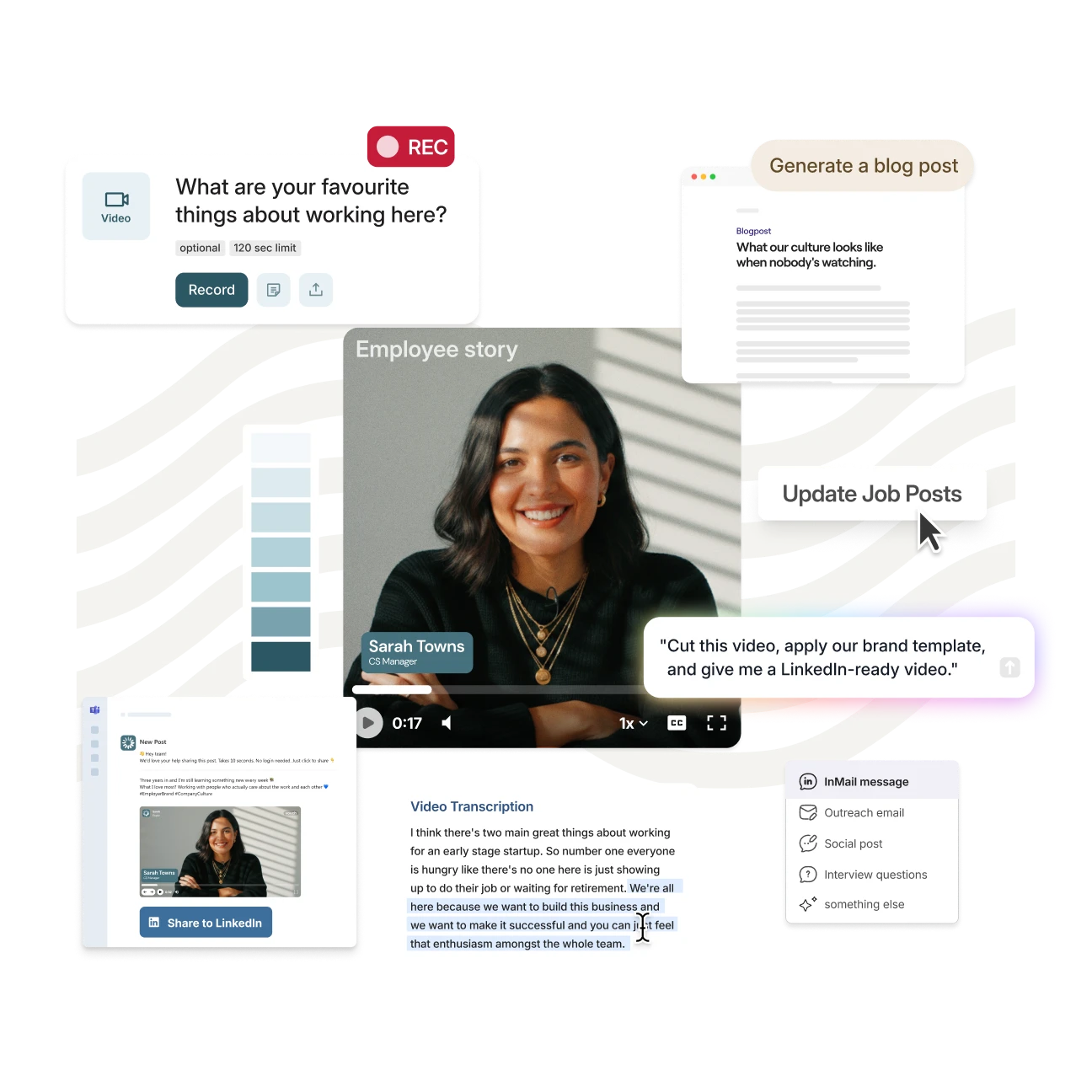
Vouch helps employer brand teams send content requests, collect employee stories remotely and keep everything organised so it’s easier to find and reuse later.
For lean teams, that means less time chasing responses and keeping track of content, and more time putting that content to use.
If you want to see how Vouch can help your team spend less time chasing content and more time using it, book a demo.

You might also like


Elevate Your Brand Today With Vouch
Discover how Vouch can accelerate talent acquisition while helping you stay on-brand.