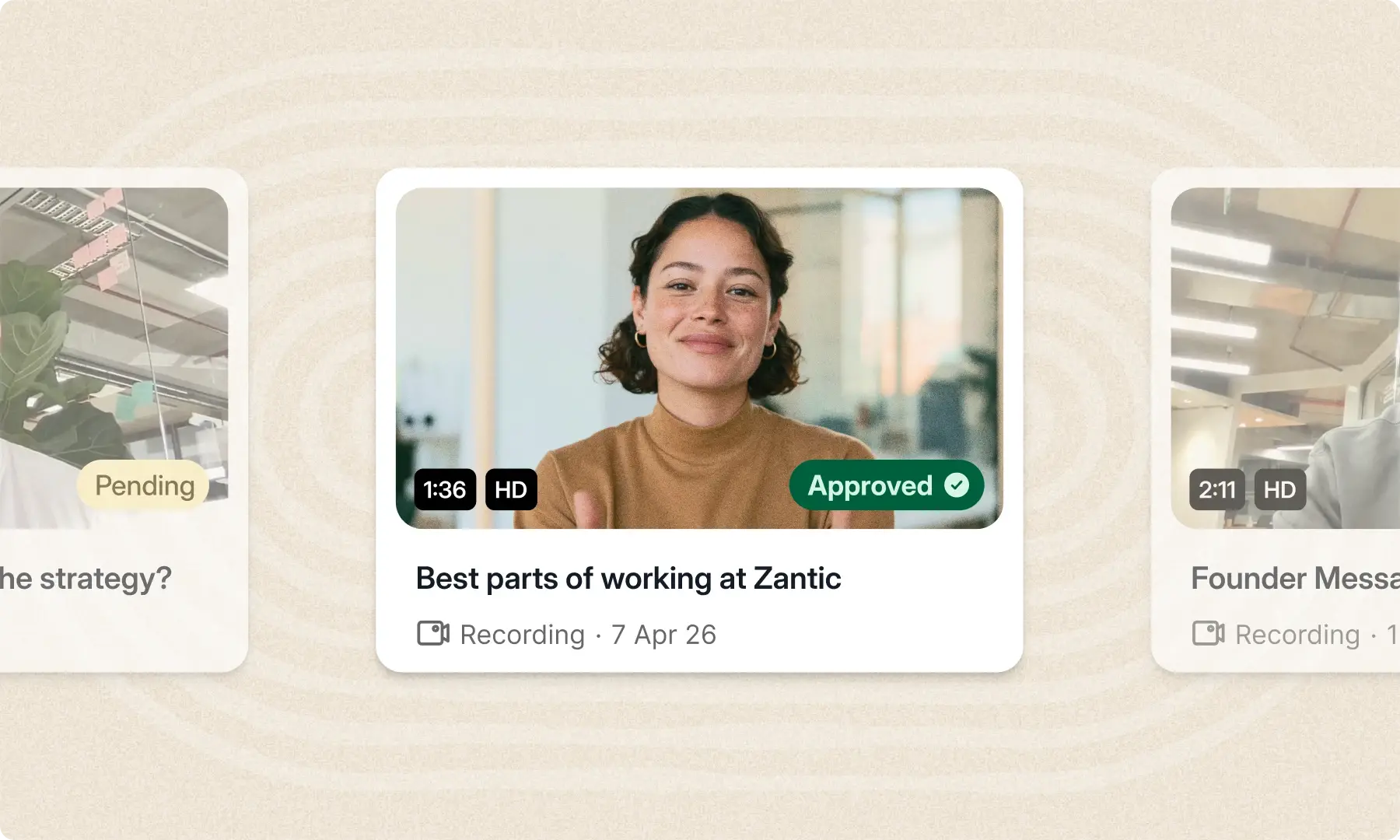
The questions you ask employees can make the difference between getting a generic answer and getting something your team can actually use.
Ask an employee “What do you like about working here?” and you may get an answer like “the people are great” or “there are lots of opportunities to grow.” Those answers aren’t wrong, but they don’t give your employer brand team much to work with.
Instead of asking whether someone has had opportunities to grow, ask what has changed in their role since they joined or what helped them take on more responsibility. That gives them something specific to talk about and can bring out details about a promotion, a new project, support from a manager or a skill they developed along the way.
Those details are what make employee stories more useful for careers pages, recruitment campaigns and social content. The goal is to give employees a clear place to start without steering them towards a particular answer.
Bring your employer brand to life
- Empower employees’ storytelling
- Transform careers sites with video
- AI-driven video editing
- Publish videos anywhere
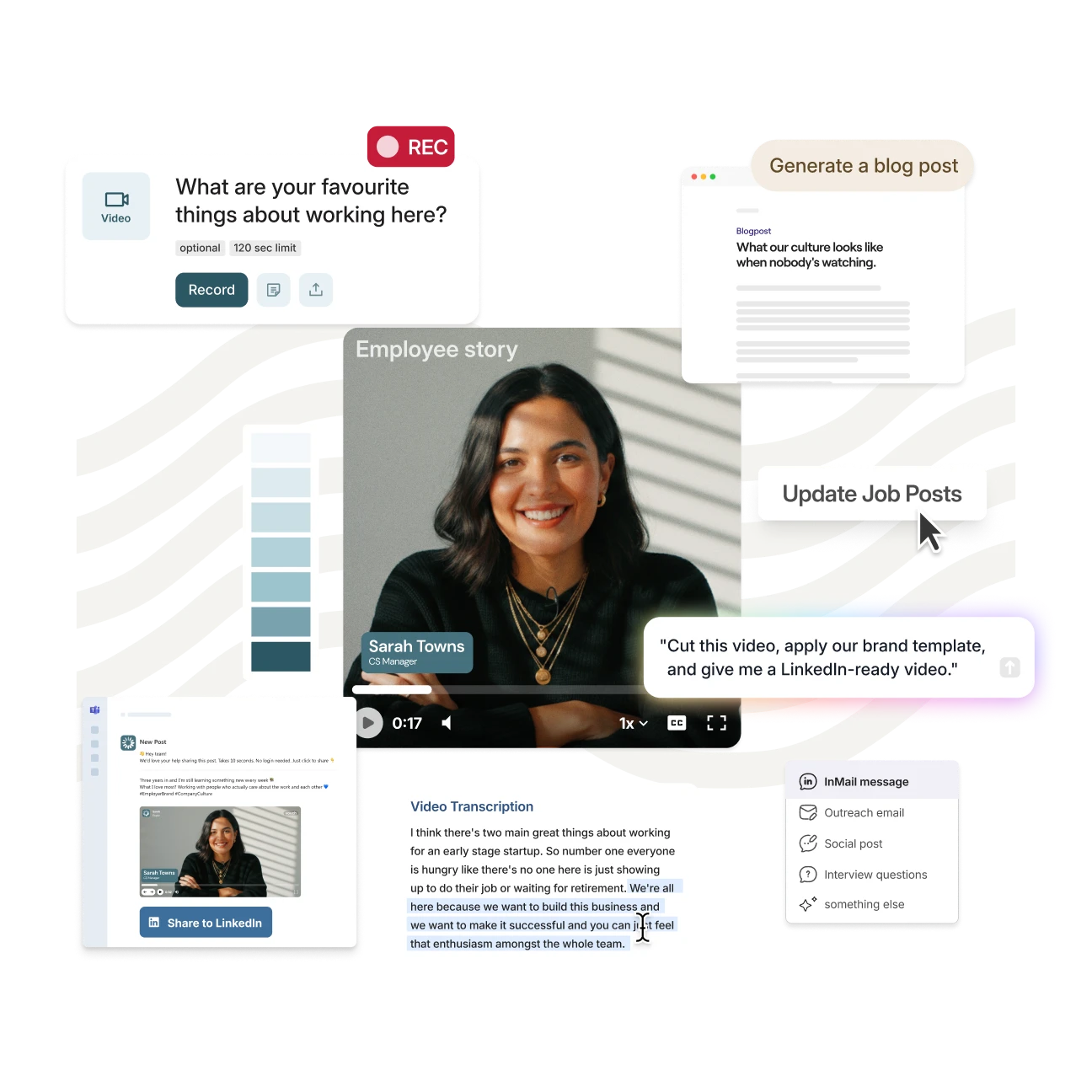
Start with the story you actually need
Before you write the questions, decide what you want the finished content to help candidates understand. That gives you a clearer idea of who to speak to and what you actually need to ask them about.
You might be trying to show what a particular role is really like, what career progression can look like or how a company value shows up in day-to-day work. Knowing that upfront helps you choose an employee who has a relevant experience to share rather than simply asking whoever is available.
It also helps you avoid sending everyone the same generic list of questions. Someone talking about career progression needs different prompts from someone describing their first few weeks in the business or what it is like to work in a particular location.
Once you know what you want the story to cover, you can ask questions that point employees towards the relevant part of their experience without telling them what to say.
Ask specific questions about real experiences
Once you know what you want the story to cover, ask employees about something they have actually experienced rather than asking them to describe a broad topic like culture, leadership or what makes the company a great place to work.
- If you want to talk about onboarding, ask what helped them settle in during their first few weeks.
- If you want to show what manager support looks like, ask about a time their manager helped them work through a challenge.
- For role-specific content, ask which part of the job took the most getting used to, what a busy day looks like or what they spend more time doing than they expected before they joined.
- If you want to show how a team works together, ask about a recent project and what working on it was actually like.
Questions like these are easier to answer because employees have something specific to think back on. Instead of trying to sum up the whole company or come up with a polished answer, they can simply talk about what happened and what the experience was like for them. Those specific details are what make employee stories feel real.
Use follow-up questions to get beyond the first answer
Even with a good question, employees won’t always give you the full story straight away. They might mention an experience worth exploring without giving enough detail to understand what happened or what made it stand out.
If someone says their team is supportive, ask if there’s a particular example that stands out or whether something happened recently that shows what that support looked like. If they say their role has changed since they joined, ask what they were doing then compared with what they do now. If they mention a project they’re proud of, ask what made that project stand out or what they enjoyed most about being part of it.
You don’t need to work through a set list of follow-up questions. Pay attention to what the employee has already said and ask about the parts that need more detail. The goal is to fill in the gaps so you come away with a clear, useful account of the employee’s experience.
Questions for different employer brand content needs
Once you know the kind of story you need, choose questions that help the employee get into the parts of their experience that will be most useful.
If you’re creating content about a particular role, help employees give candidates a realistic picture of the work. Find out what takes up most of their time, what they didn’t expect before joining or what someone applying for the role might not realise from reading the job description.
For career growth, focus on what has changed since the employee joined. How have their responsibilities developed? What opportunities helped them build new skills? What helped them move into a different role or take on more responsibility? These answers give you much more to work with than a general statement about there being “room to grow.”
With onboarding, get into what those first few weeks were actually like.
- What helped them settle in?
- What surprised them once they started?
- What would have been useful to know before their first day?
For leadership and manager support, look for examples of what that support looks like in practice. You might ask about a time their manager helped them work through a challenge, gave them feedback that changed how they approached something or trusted them to take ownership of an important piece of work.
When you’re creating content about teams and culture, avoid asking employees to sum up the culture in a few words. Instead, get them talking about what they noticed after joining, how the team works together when things get busy or a recent moment that shows what the team is like to be part of.
For location-specific content, think about what someone considering a role there would genuinely want to know. What is it like working from that office, site or region? What do employees enjoy about being based there? What should a candidate know about the working environment before they join?
And for candidate advice, take employees back to when they were considering the role themselves. What would they tell someone applying now? What do they wish they had known during the hiring process? What helped them decide the role or company was right for them?
You don’t need to cover every topic with every employee. Choose the questions that match the story you need, then use their answers to decide where a follow-up could bring out a stronger example or more useful detail.
Keep questions easy for employees to answer
A question can be specific without making the employee stop and work out what you’re asking. Keep it focused on one thing at a time and phrase it the way you would if you were speaking to them directly.
For example, “Can you tell us about your role, your team and what you enjoy most about working here?” gives someone three different things to answer at once. You’ll usually get more detail if you split it up and ask, “What does a typical day look like for you?” or “What do you enjoy most about working with your team?”
The same goes for questions that use internal language. An employee may not know what you mean by an EVP pillar or a phrase your employer brand team uses every day. Instead of asking how they “experience career development at the company,” ask what they’ve had the chance to learn since joining or whether they’ve taken on anything they wouldn’t have expected when they started.
Questions should feel easy to respond to without needing extra explanation. If an employee has to reread the question, figure out which part to answer first or translate it into their own words before they can respond, it probably needs simplifying.
Know when you have enough for a useful story
More answers don’t automatically mean better content. Once you already have a clear, detailed response, it’s easy to keep going just because you still have questions left on your list. But if an employee has given you a strong answer, you don’t need to work through every prompt you prepared.
Say you’re collecting content about what it’s like to work in a particular team. The employee has explained what they work on, talked through a recent project and given you a specific example of how the team handled a difficult deadline. At that point, asking another five questions about teamwork may just give you different versions of the same answer.
Instead, listen for what’s missing. If they mention a project but never explain what they actually did, follow up on that. If they say their role changed after they joined but don’t explain what changed, ask what they were doing before and what they’re responsible for now. But if you already have a clear example and enough detail to understand it, you can leave it there.
This matters when you start turning the responses into content too. A shorter conversation with two or three strong answers is often more useful than a long interview full of repetitive material your team then has to sort through.
Turn employee answers into content you can reuse
If an employee has already shared a useful story, don’t assume it only belongs in the campaign or piece of content you collected it for. You may be able to use that same story again somewhere else without going back to them for another interview or recording.
Say someone explains how they progressed into a more senior position and what helped them get there. You might use that story on a careers page first, then come back to part of it for a recruitment campaign, a social post about career growth or content about progression within the business.
Before asking employees for more stories, check what you already have. If your existing content is organised by role, team, location or topic, it’s much easier to spot an interview or story that could work for what you’re creating now.
The more specific the original story is, the more you can do with it later. “There are lots of opportunities here” doesn’t give you much to come back to. But if someone explains what helped them progress, what they took on along the way and what that experience was actually like, you have a story you can use in different ways without asking them to tell it all over again.
Collect better employee stories with Vouch
Better questions make it easier to get better stories, but your team still needs a simple way to send those questions out, collect responses and keep track of what comes back.
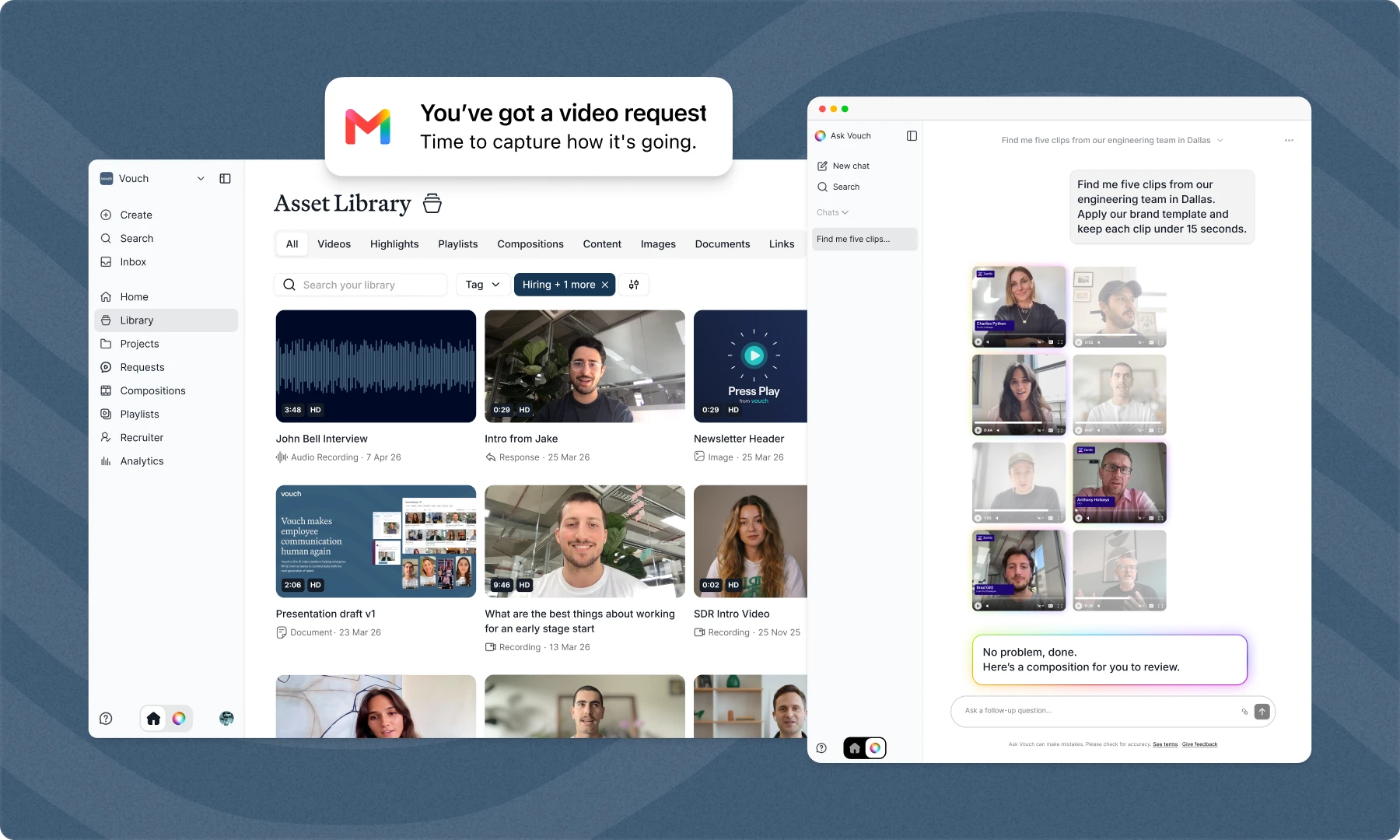
With Vouch, employer brand teams can send employees focused content requests, collect video and written responses remotely and keep those stories organised in one place. That makes it easier to find what you already have, reuse strong stories and avoid starting from scratch every time you need new content.
For lean teams, it also means less time chasing employees, checking where responses are sitting or piecing content together across different tools.
If you want to spend less time chasing employee stories and more time putting them to use, book a demo.

You might also like

Elevate Your Brand Today With Vouch
Discover how Vouch can accelerate talent acquisition while helping you stay on-brand.