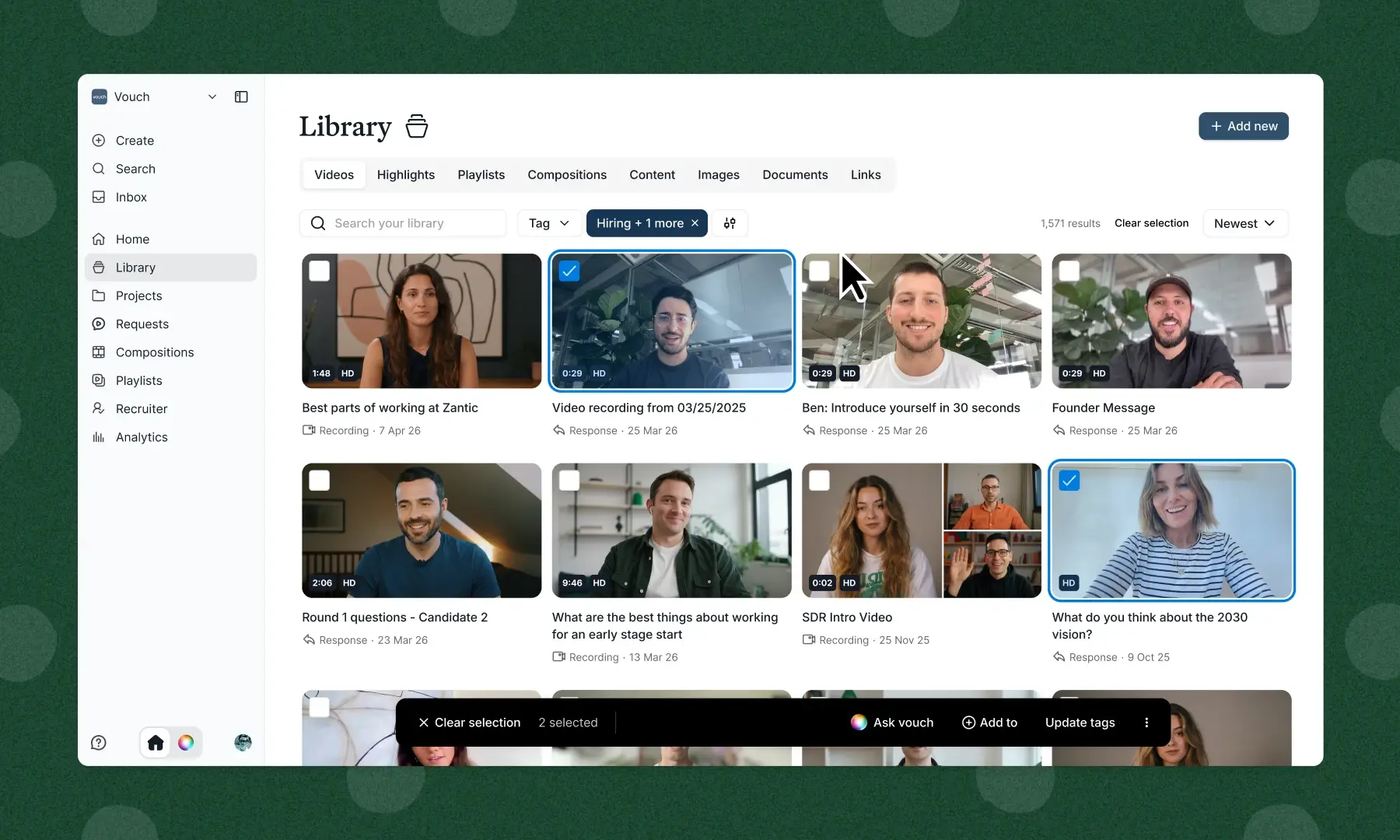
Employer brand teams rarely struggle because they lack ideas. They struggle because content takes too long to move from idea to published asset.
One employee takes two weeks to respond. A hiring manager wants to review every draft. Legal joins the approval process at the last minute. Recruiters ask for new content while approved assets sit unused in shared folders. By the time everything is ready, the hiring campaign has already moved on.
For a lean employer brand team, this work adds up quickly. The content itself might take 20 minutes to record. Everything around it—finding the right person, sending the brief, following up, collecting feedback, securing approval and finding the asset again later—can take weeks.
That is the Coordination Tax: the hidden operational work required to turn employee stories into content that creates an impact.
The good news? Most bottlenecks are caused by the process, not the people. This guide explains how to spot them and reduce them without piling more work onto employees or stakeholders.
Bring your employer brand to life
- Empower employees’ storytelling
- Transform careers sites with video
- AI-driven video editing
- Publish videos anywhere
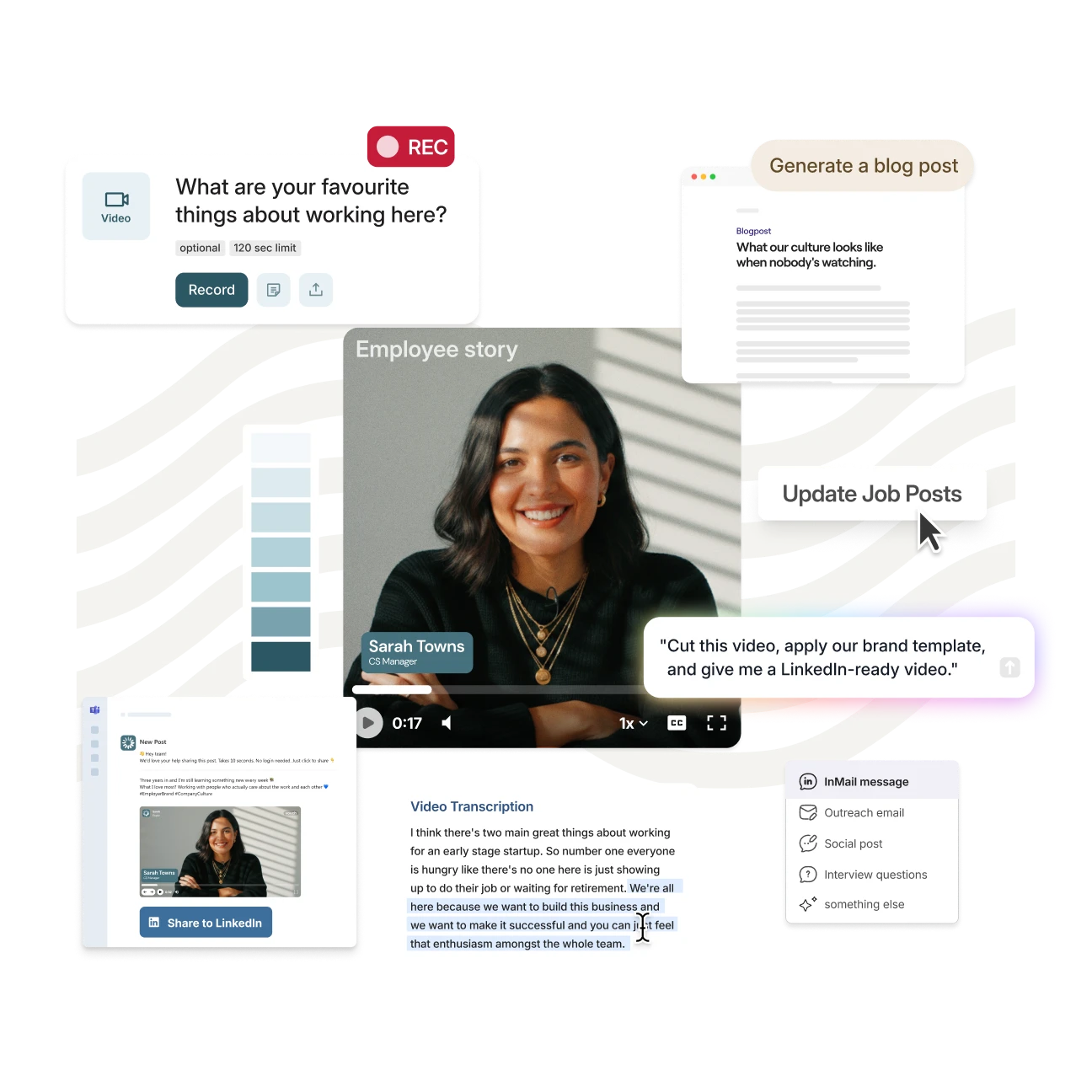
What is an employer brand content bottleneck?
A content bottleneck is any repeatable point in your workflow that slows production or stops content from being published.
Some bottlenecks are obvious, such as waiting weeks for an employee interview. Others are harder to see. Your team might spend hours chasing approvals, answering the same stakeholder questions or recreating content because no one can find what already exists.
A busy week is not necessarily a bottleneck. A bottleneck is a recurring point of friction that limits how quickly work moves.
Common employer brand content bottlenecks include:
- Finding the right employees to participate
- Waiting for stakeholder approvals
- Scheduling interviews
- Collecting feedback from multiple reviewers
- Editing and formatting content
- Searching for previously created assets
- Confirming usage rights and consent
- Managing requests from different teams or business units
Individually, these delays can look small. Together, they create a Coordination Tax that hits lean teams hardest.
Why employer brand teams experience bottlenecks
Employer brand teams support a lot of people at once:
- Recruiters need content for current openings.
- Marketing wants employee stories for campaigns.
- Communications needs leadership content.
- Hiring managers want role-specific videos.
- Employees are being asked to contribute on top of their day jobs.
Without a repeatable system, every request becomes a new project. The employer brand team ends up spending its time:
- Explaining the brief
- Finding participants
- Scheduling interviews
- Sending reminders
- Answering questions
- Coordinating approvals
- Tracking versions
- Following up on deadlines
The problem is not a lack of effort. It is that too much of the process depends on manual coordination.
The most common employer brand content bottlenecks, and how to fix them
1. Finding the right employees
Many organizations rely on the same small group of people whenever content is needed. Eventually, those employees become overused or unavailable, while other great contributors are never asked.
Instead of starting from scratch for every campaign, build a contributor list and group employees by:
- Team
- Role
- Location
- Career stage
- Language
- Area of expertise
This gives your team a more diverse pool of voices and makes it much faster to find the right person for each request.
2. Sending unclear content requests
Employees are more likely to delay a request when they are not sure what is expected of them.
They are often left wondering:
- What should I talk about?
- How long will this take?
- Who will see it?
- When is it due?
- Can I review it before it is published?
A consistent request template answers those questions upfront. It should explain the purpose, audience, format, deadline, time commitment and what will happen after submission.
For a practical framework, see Employer Brand Content Request Templates: What to Ask Employees and Stakeholders.
3. Involving too many approvers
When every stakeholder reviews every asset, teams get duplicate feedback, conflicting edits, slow review cycles and unclear ownership.
Define approval responsibilities before production begins:
Not every stakeholder needs to approve every asset. The right review path should depend on the content and the level of risk.
4. Using approval chains instead of approval rules
Approval chains get slower every time another person is added. Approval rules are faster because everyone knows when their involvement is actually needed.
For example:
- Recruiters review role accuracy.
- Hiring managers review technical information.
- Brand reviews tone and visual consistency.
- Legal reviews regulated, sensitive or high-risk content.
This prevents a simple employee culture story from going through the same process as a regulated campaign.
5. Creating one-off content
One of the biggest bottlenecks is repeatedly collecting content that already exists.
An employee records a story for LinkedIn. A few months later, a recruiter requests almost identical content because they did not know the first version existed.
Every approved employee story should be organized so it can support more than one channel, including:
- Careers pages
- Job ads
- Social media
- Employee advocacy
- Recruitment marketing
- Candidate emails
- Internal communications
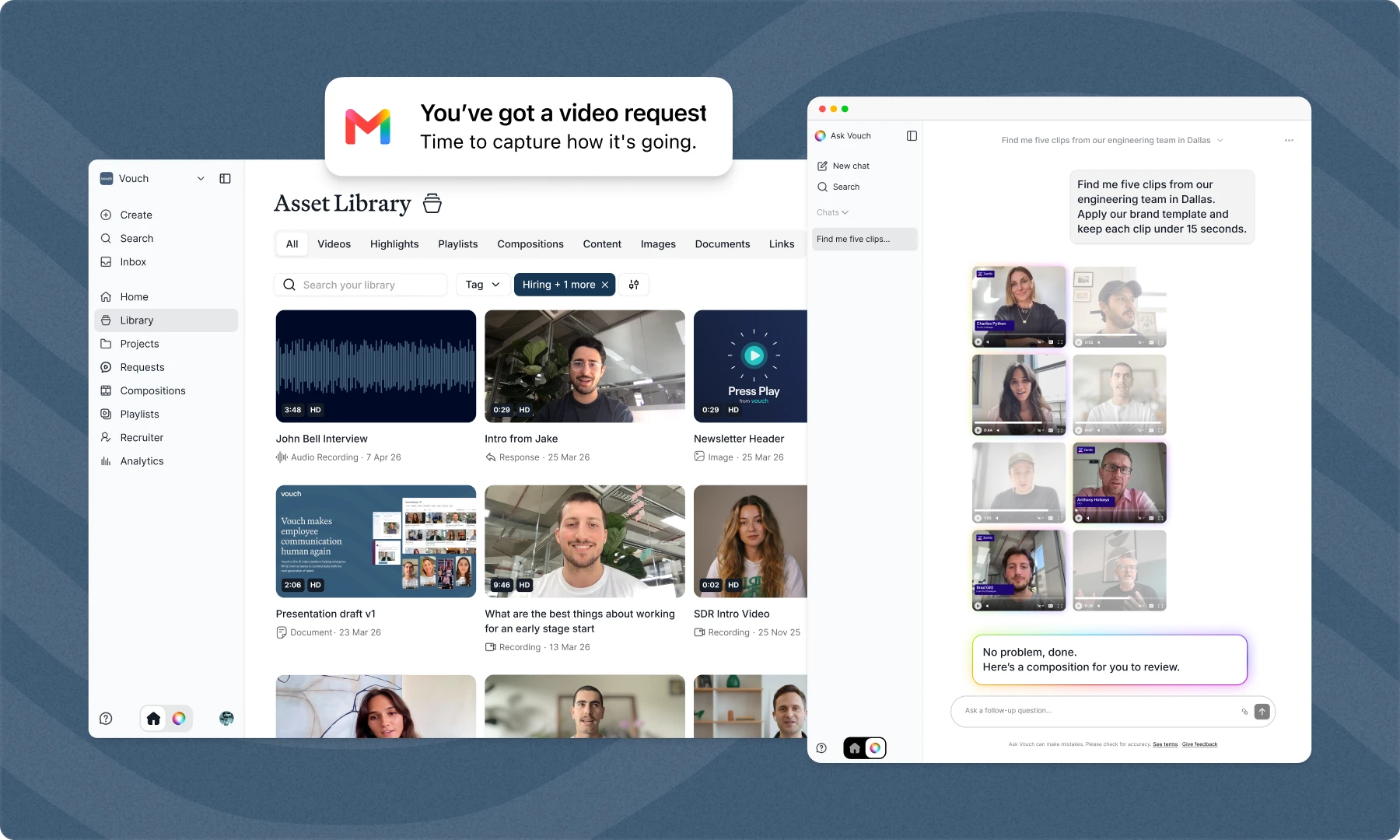
Vouch's guide on how to build an employee content library that actually gets used explains how better organization and search can reduce duplicate requests.
6. Reinventing the workflow every time
Systems beat heroics. A simple, repeatable workflow makes it easier to see where work is getting stuck and keeps every campaign from becoming a custom project.
The workflow does not need to be complicated. It just needs to be clear enough that people know what happens next.
7. Relying on manual follow-up
Follow-up emails can become one of the biggest hidden workloads for an employer brand team. A simple reminder rhythm reduces the need to check every request individually.
Employees are more likely to respond when the deadline and process are clear from the start.
8. Asking for too much at once
Large, open-ended requests are easy to put off. Asking an employee to cover company culture, career development, leadership, benefits, diversity and their daily work in one go can feel like a project of its own.
Ask two or three focused questions instead. Smaller requests feel achievable, take less time and usually lead to stronger, more specific answers.
Track where the process slows down
Many teams know content feels slow but cannot see exactly where time is being lost.
Start with a few basic measures:
You do not need sophisticated reporting. Even simple tracking can show whether the real delay sits with participation, approvals, editing or another part of the workflow.
Use your own starting point as the benchmark. The goal is not to chase a universal number; it is to reduce the drag in your process over time.
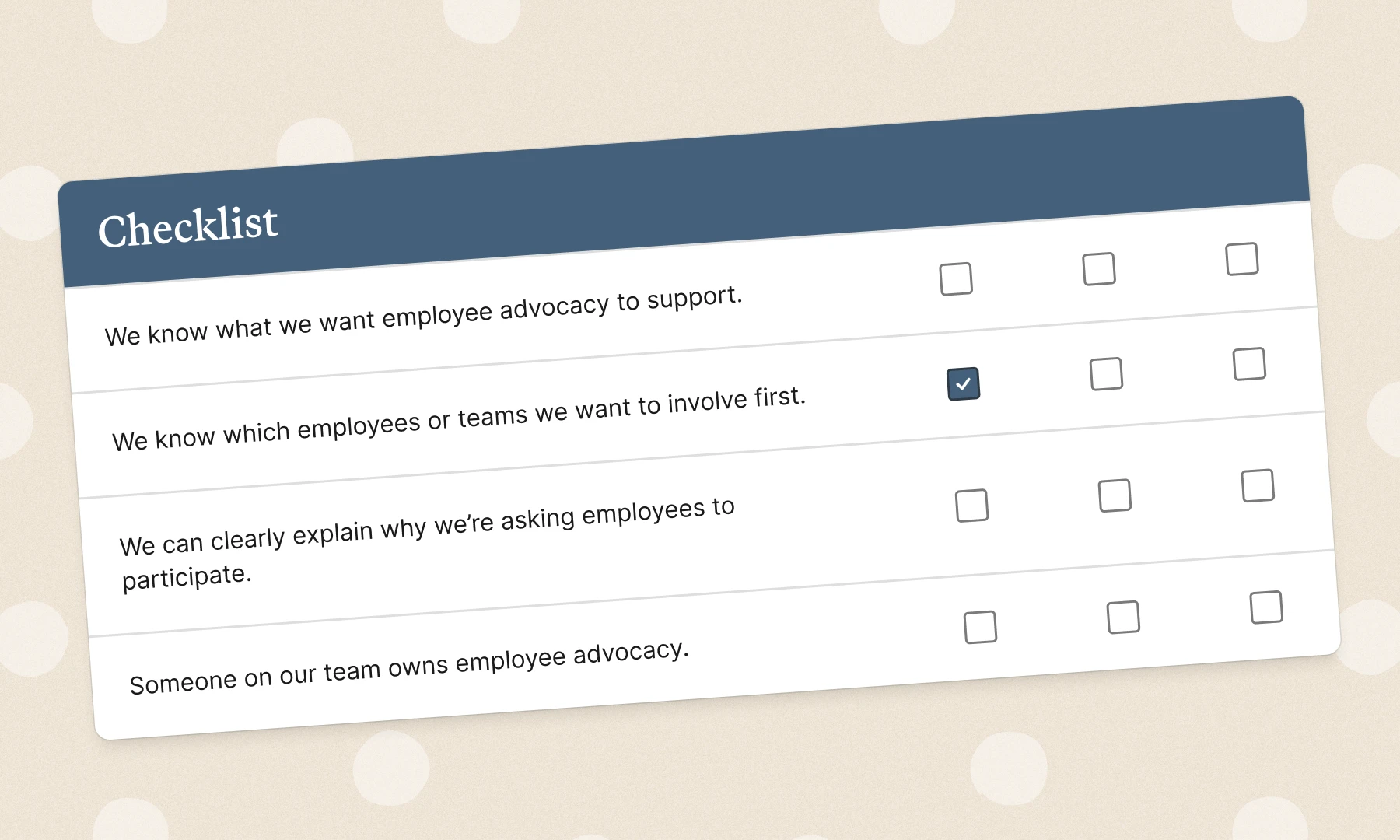
Employer brand content operations checklist
Use this checklist before launching a campaign:
- The campaign objective is defined.
- The target audience is confirmed.
- Suitable employees are identified.
- The content request is prepared.
- Approval responsibilities are assigned.
- The recording deadline is agreed.
- The reminder schedule is prepared.
- The storage location is confirmed.
- Distribution channels are planned.
- Success measures are defined.
Think beyond the individual campaign
The best lean employer brand teams do not optimize one campaign at a time. They build a system that becomes easier to use with every employee contribution.
Every approved story should make the next campaign faster by:
- Expanding the content library
- Reducing duplicate requests
- Creating reusable assets
- Improving recruiter self-service
- Giving future contributors examples to follow
Over time, the coordination required should decrease while the value of your content library grows. That is the difference between producing more one-off assets and building a repeatable employer brand content engine.
Reduce coordination, not authenticity
Reducing bottlenecks does not mean turning employee storytelling into a rigid corporate process. Employees should still share genuine experiences in their own words.
The goal is to remove the unnecessary admin around those stories.
Clear requests, focused questions, defined approval rules and a searchable content library help lean employer brand teams spend less time chasing people and more time shaping stories that support hiring.
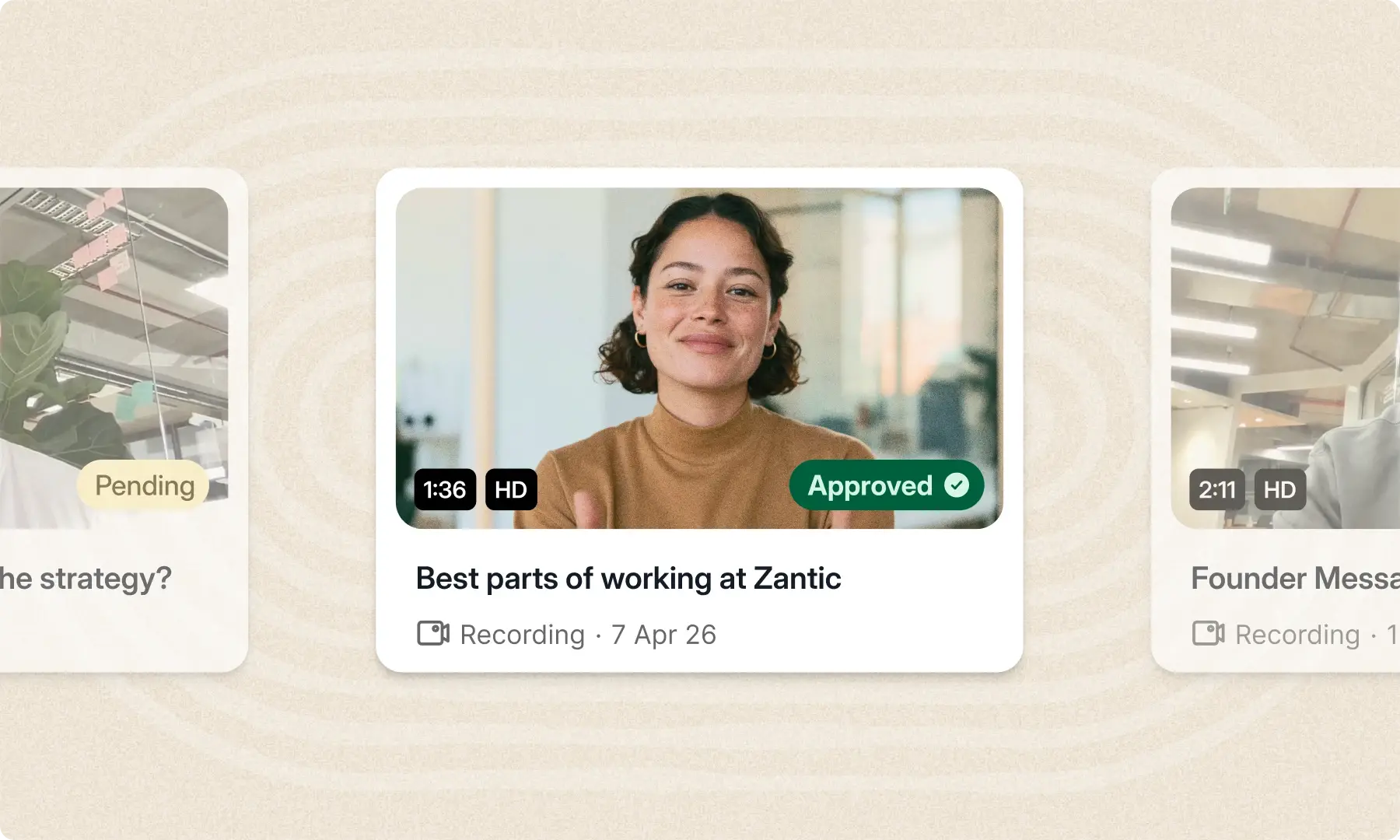
Vouch helps employer brand teams collect employee stories, manage approvals, organize content and reuse approved assets across recruitment marketing, employer branding and employee advocacy.
Book a demo to see how Vouch can help your team collect, approve and reuse employee content with less manual coordination.
Frequently asked questions
What causes employer brand content bottlenecks?
The most common causes are unclear requests, too many approvals, difficulty finding participants, manual follow-up, disconnected storage systems and repeated requests for similar content. These are all symptoms of the same underlying problem: too much manual coordination across people, content and workflows.
How can employer brand teams speed up content creation?
Use consistent request templates, define approval responsibilities, create a repeatable workflow, make existing content easy to find and reduce manual follow-up. Before creating something new, check whether an approved employee story can be reused or repurposed.
Should every piece of employer brand content be approved?
No. The review process should reflect the content type and your organization's requirements. Routine employee stories may need fewer reviewers than regulated, sensitive or legally complex content.
How can lean employer brand teams produce more content?
Focus on reducing coordination before increasing production. Streamlining requests, approvals, follow-up and content reuse can help a small team get more content live without adding headcount.
What is the biggest hidden employer brand bottleneck?
For many organizations, it is not creating the content itself. It is the manual coordination involved in finding contributors, following up, collecting approvals and locating content that has already been created. Vouch calls this the Coordination Tax.

You might also like

Elevate Your Brand Today With Vouch
Discover how Vouch can accelerate talent acquisition while helping you stay on-brand.